TRUTH.
Fredric Baur was a chemist. He spent his career at Procter & Gamble developing food storage solutions, and in 1966 he filed a patent for a tubular container that could stack uniformly shaped potato chips without crushing them. The patent was granted in 1970. Baur considered it the achievement of his life — and when he died in 2008, he made sure the world knew it.
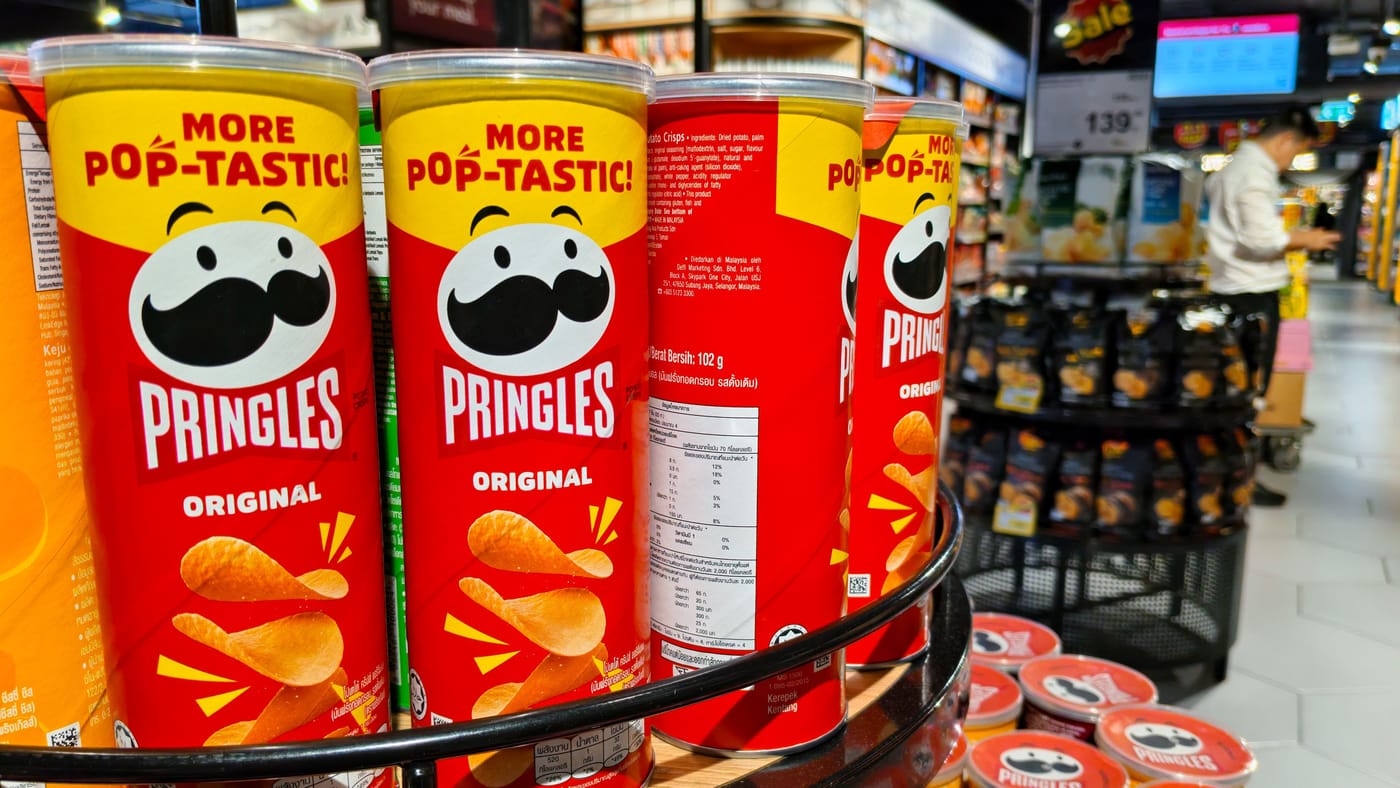
Baur left instructions in his will requesting that a portion of his cremated remains be placed inside a Pringles can and buried with him. His children honored the request.According to Atlas Obscura, his eldest son Larry described how the family stopped at a Walgreens on the way to the funeral home to buy the can. There was a brief family debate about which flavor to use. Larry made the call: original. The can was buried at Arlington Memorial Gardens in Cincinnati, alongside a traditional urn containing the rest of his ashes.
Baur was not a household name, but his invention changed the geometry of snack food forever.Before the Pringles can, chips came in bags — crushable, irregular, and inefficient to stack. Baur's hyperbolic paraboloid chip shape and tubular container solved all three problems in one design. The same container in use today is functionally identical to his 1970 patent.
The Pringles can has outlasted almost every product it was meant to compete with.NPR covered the burialin 2008 with a line that captured the whole thing precisely: "Now so is the inventor himself."
Most people will never have a product they're proud enough of to be buried in. Fredric Baur did, and he made absolutely certain everyone would know about it.
Baur left instructions in his will requesting that a portion of his cremated remains be placed inside a Pringles can and buried with him. His children honored the request.According to Atlas Obscura, his eldest son Larry described how the family stopped at a Walgreens on the way to the funeral home to buy the can. There was a brief family debate about which flavor to use. Larry made the call: original. The can was buried at Arlington Memorial Gardens in Cincinnati, alongside a traditional urn containing the rest of his ashes.
Baur was not a household name, but his invention changed the geometry of snack food forever.Before the Pringles can, chips came in bags — crushable, irregular, and inefficient to stack. Baur's hyperbolic paraboloid chip shape and tubular container solved all three problems in one design. The same container in use today is functionally identical to his 1970 patent.
The Pringles can has outlasted almost every product it was meant to compete with.NPR covered the burialin 2008 with a line that captured the whole thing precisely: "Now so is the inventor himself."
Most people will never have a product they're proud enough of to be buried in. Fredric Baur did, and he made absolutely certain everyone would know about it.















