Witnesses say they saw it happen. Some of them had just taken souvenir photos on the ride — the cameras that capture your expression mid-drop — and when they looked at their pictures afterward, they saw it in the frame.
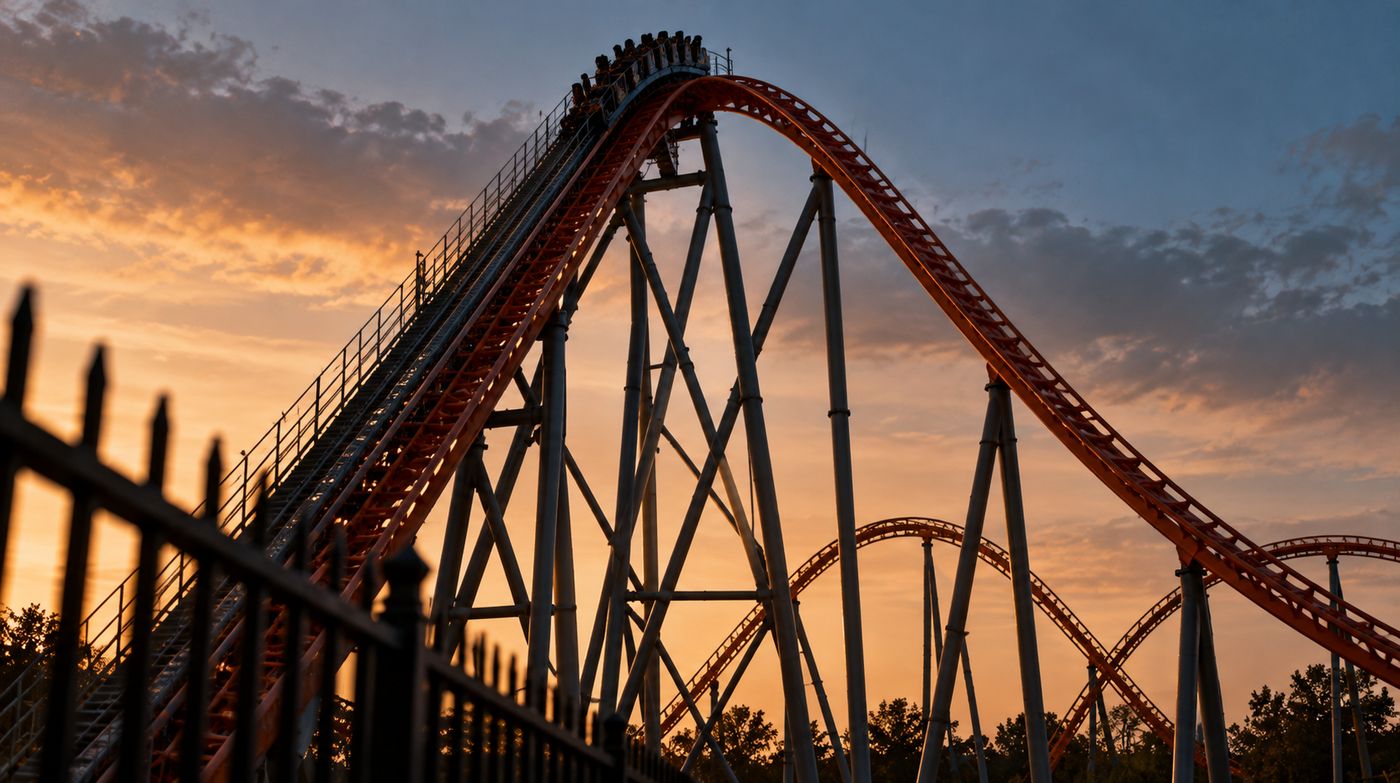
A 42-year-old man named Hassan Jihad Ibn Kariem was riding the Goliath roller coaster at Six Flags Over Georgia on Monday afternoon when he was ejected from his car. The Goliath reaches 200 feet. It hits 70 miles per hour.
He hit parts of the ride on the way down. He hit other riders. He was found dead beneath the coaster.
Four other people were injured. The ride stopped mid-run, cars stuck on the 200-foot incline, riders stranded and screaming while below them investigators began to work the scene. It took hours to evacuate everyone.
What Witnesses Saw
"God just let this man stay in that cart," one witness told NBC affiliate WXIA. "It all happened so fast."
Another witness described watching the man fly from the car and strike sections of the ride before hitting the ground. Multiple witnesses said the fall was captured in souvenir photos — the cameras that photograph riders automatically at peak moments of the experience — making this one of the most documented incidents of its kind.
Six Flags closed nine roller coasters across six of its parks immediately after the incident, citing "an abundance of caution." The Cobb County Police Department's major crimes unit opened a formal investigation. The Georgia Office of the Commissioner of Insurance and Safety Fire announced it was also investigating. Six Flags lost approximately $170 million in market value on Tuesday.
The company released a statement saying it was "deeply saddened" and was "providing support to guests and team members affected." It declined to share additional details "out of respect for the family's privacy."
Why Roller Coaster Deaths Are So Rare — and So Alarming When They Happen
The statistical reality of roller coaster safety is one of the more counterintuitive facts in public risk assessment. According to the International Association of Amusement Parks and Attractions, the odds of being seriously injured on a fixed-site ride at a US amusement park are approximately 1 in 17 million. Deaths are rarer still.
Which is exactly why they stop people cold when they happen. Every person who has ever ridden a roller coaster — every person who has ever been strapped in, gone over the first drop, and felt that specific combination of terror and exhilaration — processes a story like this through a personal lens. The question is always the same: how does someone come out of a seat that's designed to keep them in?
The answer, in most roller coaster fatality cases, involves either a pre-existing medical condition that made the ride dangerous for that specific person, a restraint failure, or a combination of factors that are often unclear until a full investigation is complete. What caused Kariem to be ejected from the Goliath has not been disclosed. The investigation is ongoing.
Six Flags Goliath: What the Ride Is
The Goliath at Six Flags Over Georgia is a hypercoaster — a specific category defined by a lift hill over 200 feet. It opened in 2006. Its full-circuit duration is approximately two and a half minutes. Its drop is 170 feet.
The ride has height requirements and health warnings: visitors with heart conditions, back problems, high blood pressure, or certain other conditions are advised not to ride. The pre-boarding warnings are standard across major coasters.
What they don't account for is whatever happened Monday at 4 p.m., on the 200-foot lift hill, that sent a 42-year-old man from Atlanta into the air and onto the track below.
Riders who were on the coaster when it stopped were eventually evacuated one by one, walking down the steep incline in groups of four. A man visiting from Canada who had been stuck at the top for hours told CNN he had watched emergency response from above while trying to understand what had happened below him.
The investigation has no projected end date. The Goliath remains closed.