MYTH.
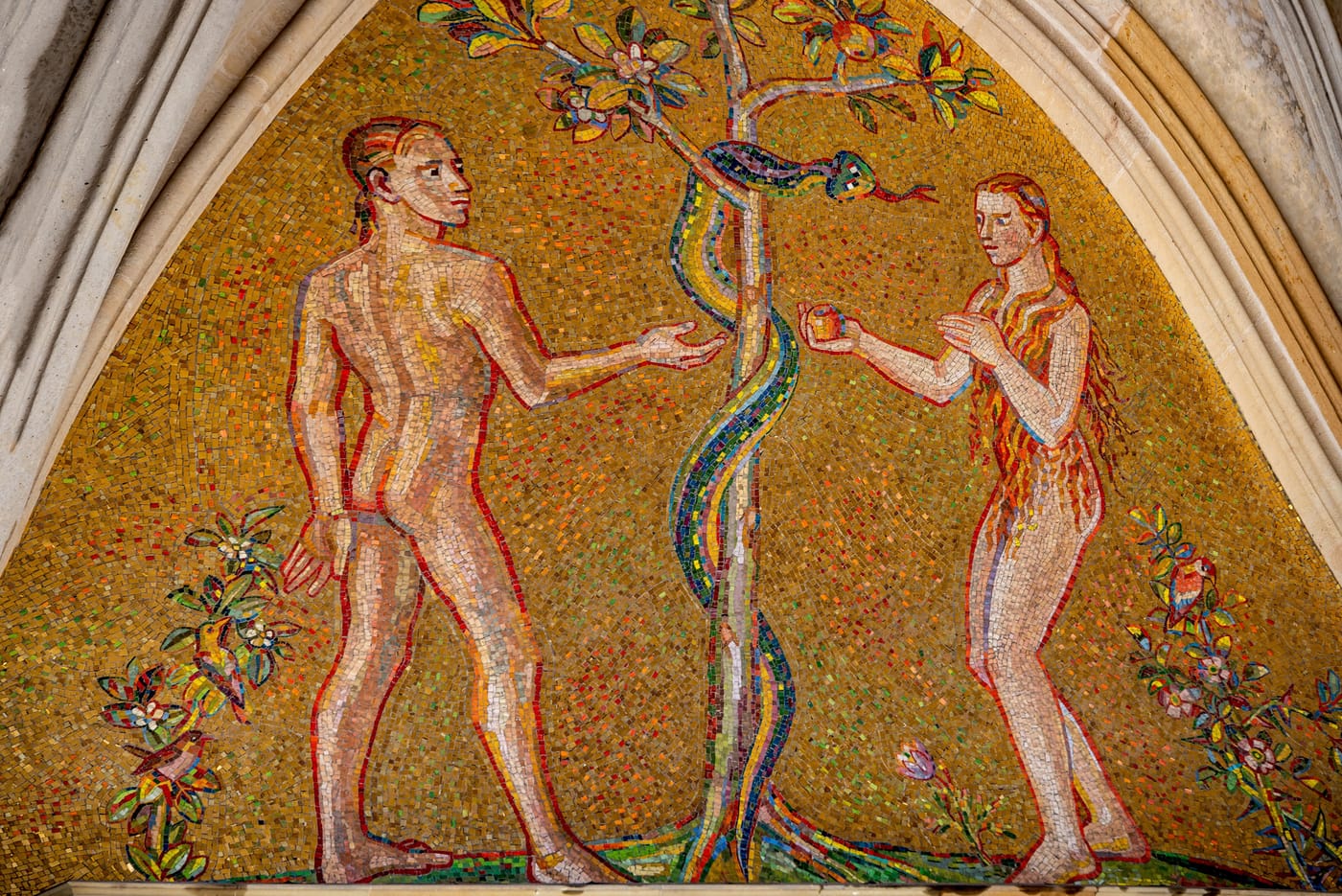
The Bible never names the fruit. Not once. The Book of Genesis refers only to "the fruit of the tree of the knowledge of good and evil" — a generic description that leaves the specific variety entirely unspecified. The apple became the forbidden fruit because of a pun, and the pun stuck for 1,500 years.
In A.D. 382, Pope Damasus I commissioned a scholar named Jerome to translate the Hebrew Bible into Latin.Live Science reportsthat Jerome translated the Hebrew word peri — a generic term for any fruit — using the Latin word malum. The problem, as linguist Robert Appelbaum of Uppsala University has explained, is that malum means two things in Latin: apple and evil. Jerome almost certainly chose it deliberately, as a pun linking the fruit of temptation to the concept of sin. The Latin translation became known as the Vulgate Bible, the dominant text in Western Christianity for centuries, and the apple-evil pun traveled with it.
Apples don't even grow in the Middle East — they originate from Kazakhstan in Central Asia.Rabbinic commentators, working from the original Hebrew, variously identified the fruit as a fig, a pomegranate, a grape, an apricot, a citron, and in some readings, a form of intoxicating wine. The apple interpretation is almost entirely absent from Jewish theological tradition.
NPR notesthat Renaissance painters and John Milton's 1667 epic poem Paradise Lost — which explicitly names the fruit as an apple twice — helped cement the image in Western culture. By then the pun had already done its damage. Michelangelo painted it on the Sistine Chapel ceiling. The apple was in.
A Latin wordplay from the 4th century is why the most famous piece of fruit in history has the wrong name. Language is a long game.
In A.D. 382, Pope Damasus I commissioned a scholar named Jerome to translate the Hebrew Bible into Latin.Live Science reportsthat Jerome translated the Hebrew word peri — a generic term for any fruit — using the Latin word malum. The problem, as linguist Robert Appelbaum of Uppsala University has explained, is that malum means two things in Latin: apple and evil. Jerome almost certainly chose it deliberately, as a pun linking the fruit of temptation to the concept of sin. The Latin translation became known as the Vulgate Bible, the dominant text in Western Christianity for centuries, and the apple-evil pun traveled with it.
Apples don't even grow in the Middle East — they originate from Kazakhstan in Central Asia.Rabbinic commentators, working from the original Hebrew, variously identified the fruit as a fig, a pomegranate, a grape, an apricot, a citron, and in some readings, a form of intoxicating wine. The apple interpretation is almost entirely absent from Jewish theological tradition.
NPR notesthat Renaissance painters and John Milton's 1667 epic poem Paradise Lost — which explicitly names the fruit as an apple twice — helped cement the image in Western culture. By then the pun had already done its damage. Michelangelo painted it on the Sistine Chapel ceiling. The apple was in.
A Latin wordplay from the 4th century is why the most famous piece of fruit in history has the wrong name. Language is a long game.















