TRUTH.
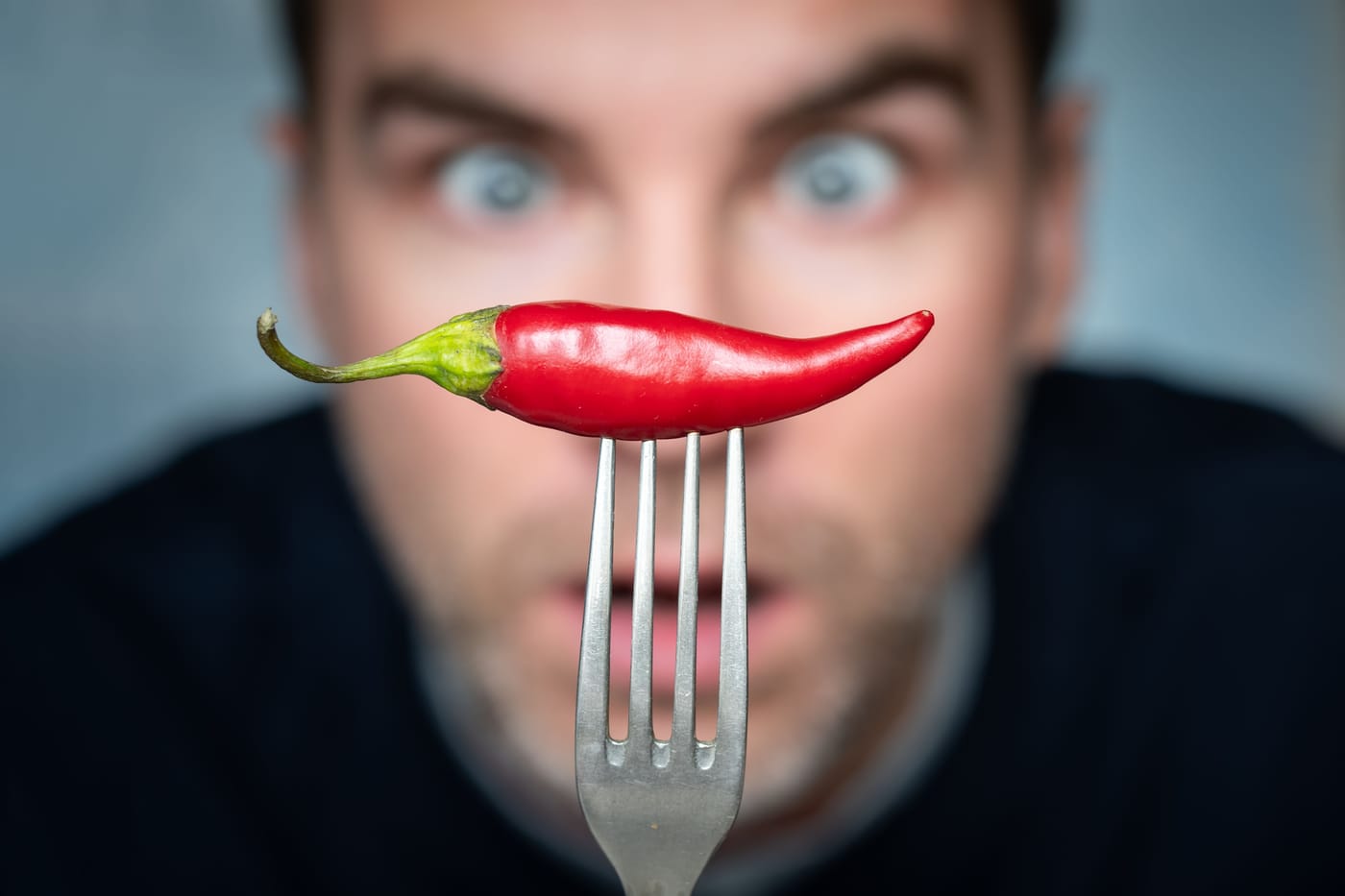
Your tongue has taste receptors for sweet, salty, sour, bitter, and umami. Spicy is not on that list — because spicy has nothing to do with taste at all. When you bite into a chili pepper, you are not tasting it. You are, technically speaking, experiencing pain.
The active compound in chili peppers is capsaicin. When it hits your tongue, it bypasses taste receptors entirely and binds directly to pain receptors — specifically a channel called TRPV1,which the body uses to detect dangerously high temperatures. Capsaicin doesn't actually heat anything. It tricks TRPV1 into firing as though it does. Your brain receives a signal that your mouth is burning — because as far as your nervous system is concerned, it is.
The sweating, the watering eyes, the urge to reach for water that doesn't actually help — those are all real physiological responses to a pain signal.Your body is genuinely trying to protect you from a threat that isn't there.And the reason water makes it worse is that capsaicin is fat-soluble, not water-soluble — drinking water spreads it around. Dairy works because the protein casein binds to capsaicin and carries it away.
Here's where it gets stranger: the reason people enjoy spicy food at all is because the brain, responding to what it perceives as pain,releases endorphins— the same natural painkillers that follow intense exercise. The heat-seeking behavior of spice lovers is, in a meaningful sense, a pursuit of a controlled endorphin release. Capsaicin has even made it into clinical pain treatments, used in topical creams and patches for arthritis and nerve pain.
There is also an evolutionary footnote worth savoring: chili plants produce capsaicin specifically to deter mammals from eating them. Birds don't have TRPV1 receptors, so they eat the peppers freely and disperse the seeds. The plant found a way to recruit birds as delivery agents while keeping mammals away. Humans, characteristically, ignored the warning and asked for hot sauce.
The active compound in chili peppers is capsaicin. When it hits your tongue, it bypasses taste receptors entirely and binds directly to pain receptors — specifically a channel called TRPV1,which the body uses to detect dangerously high temperatures. Capsaicin doesn't actually heat anything. It tricks TRPV1 into firing as though it does. Your brain receives a signal that your mouth is burning — because as far as your nervous system is concerned, it is.
The sweating, the watering eyes, the urge to reach for water that doesn't actually help — those are all real physiological responses to a pain signal.Your body is genuinely trying to protect you from a threat that isn't there.And the reason water makes it worse is that capsaicin is fat-soluble, not water-soluble — drinking water spreads it around. Dairy works because the protein casein binds to capsaicin and carries it away.
Here's where it gets stranger: the reason people enjoy spicy food at all is because the brain, responding to what it perceives as pain,releases endorphins— the same natural painkillers that follow intense exercise. The heat-seeking behavior of spice lovers is, in a meaningful sense, a pursuit of a controlled endorphin release. Capsaicin has even made it into clinical pain treatments, used in topical creams and patches for arthritis and nerve pain.
There is also an evolutionary footnote worth savoring: chili plants produce capsaicin specifically to deter mammals from eating them. Birds don't have TRPV1 receptors, so they eat the peppers freely and disperse the seeds. The plant found a way to recruit birds as delivery agents while keeping mammals away. Humans, characteristically, ignored the warning and asked for hot sauce.















