MYTH.
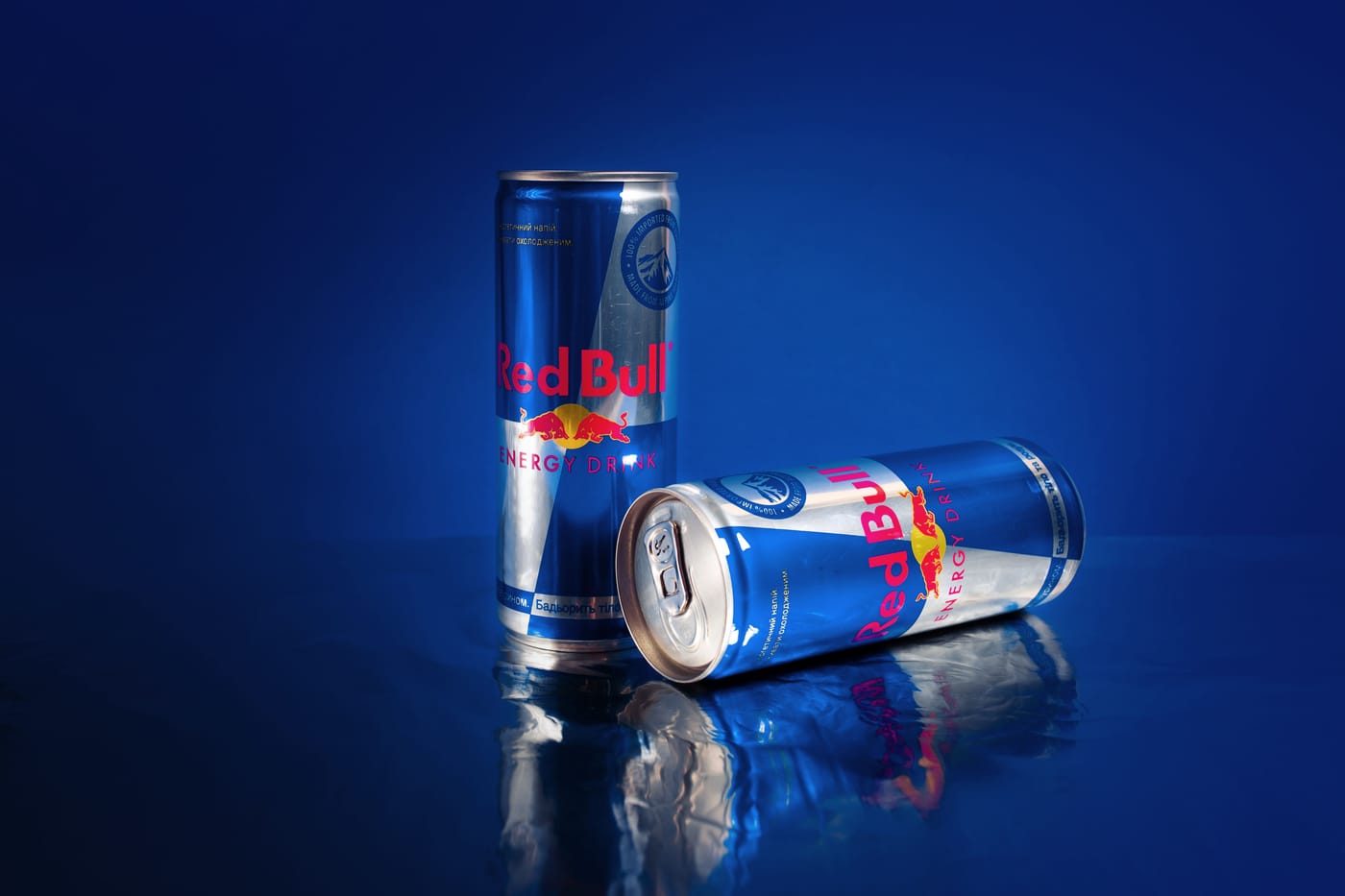
Red Bull has built one of the most recognizable brands on the planet on the promise of energy. The wings. The Formula One cars. The cliff-divers and base jumpers. The cans stacked behind every bar and convenience store counter. What the marketing has never needed to mention: a standard 8.4-ounce can of Red Bull contains 80 milligrams of caffeine. A standard cup of coffee contains between 95 and 200 milligrams. Red Bull, the energy drink, has less caffeine than a regular cup of coffee.
Research comparing the two confirmsthat coffee has both a higher average and a much higher ceiling for caffeine content — and that for most healthy adults wanting a reliable energy boost, coffee delivers more caffeine per serving at lower cost and with no added sugar. A can of regular Red Bull contains 27 grams of sugar — roughly equivalent to a can of Coke.
Red Bull does contain additional ingredients: taurine, B vitamins, and inositol.Taurine is an amino acid your body produces naturally and consumes in quantity from meat and fish; the 1,000 mg in a can of Red Bull is not considered pharmacologically significant at that dose.The B vitamins support metabolism but do not directly produce an energy sensation. The actual mechanism behind Red Bull's perceived effect is a combination of caffeine, sugar, and the placebo-like psychological response to consuming something marketed as an energy product.
Red Bull originated as a Thai truck driver's drink called Krating Daeng, sold since 1976.Austrian businessman Dietrich Mateschitz discovered it on a business trip, licensed the formula, reformulated it for Western tastes, and built a $16 billion brand around a product with less caffeine than what most of his customers already drank for breakfast.
It does not give you wings. It gives you slightly less caffeine than your morning coffee, in a smaller can, for considerably more money.
Research comparing the two confirmsthat coffee has both a higher average and a much higher ceiling for caffeine content — and that for most healthy adults wanting a reliable energy boost, coffee delivers more caffeine per serving at lower cost and with no added sugar. A can of regular Red Bull contains 27 grams of sugar — roughly equivalent to a can of Coke.
Red Bull does contain additional ingredients: taurine, B vitamins, and inositol.Taurine is an amino acid your body produces naturally and consumes in quantity from meat and fish; the 1,000 mg in a can of Red Bull is not considered pharmacologically significant at that dose.The B vitamins support metabolism but do not directly produce an energy sensation. The actual mechanism behind Red Bull's perceived effect is a combination of caffeine, sugar, and the placebo-like psychological response to consuming something marketed as an energy product.
Red Bull originated as a Thai truck driver's drink called Krating Daeng, sold since 1976.Austrian businessman Dietrich Mateschitz discovered it on a business trip, licensed the formula, reformulated it for Western tastes, and built a $16 billion brand around a product with less caffeine than what most of his customers already drank for breakfast.
It does not give you wings. It gives you slightly less caffeine than your morning coffee, in a smaller can, for considerably more money.















