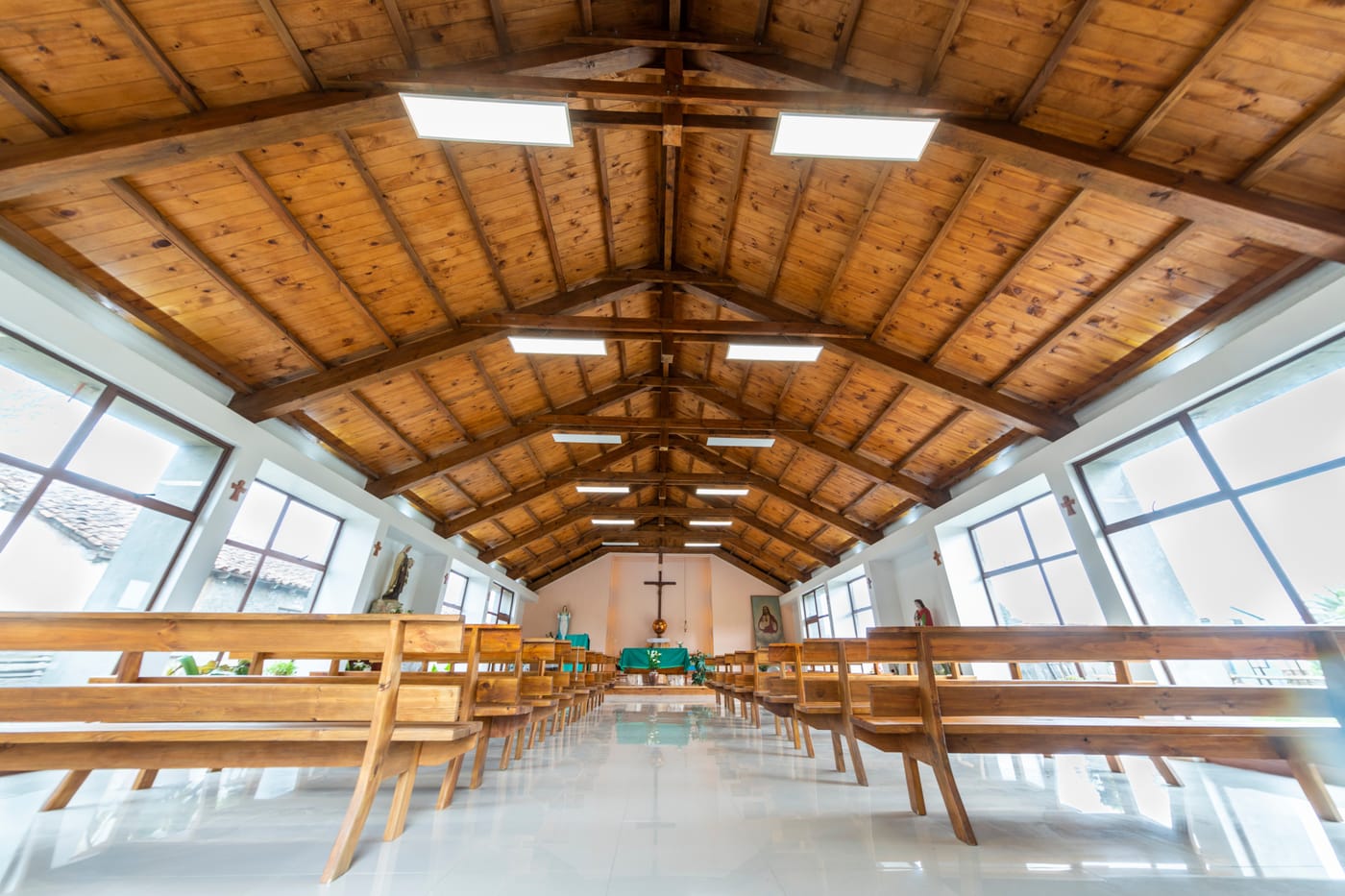
The shortage of ordained clergy in the United States is not a new story. What's new is the scale, the acceleration, and the communities absorbing the consequences.
A new Axios investigation, drawing on data from theological accreditors, federal labor statistics, and the Pew Research Center, maps a collapsing pipeline that cuts across nearly every Christian denomination in America. Enrollment in Master of Divinity programs — the standard graduate credential for Protestant pastors — fell 14% between 2020 and 2024. Catholic seminary enrollment dropped significantly in the same period. Black Protestant enrollment in pastoral training programs has fallen 31% since 2000. And roughly 15,000 American churches closed their doors in 2024 and 2025 alone.
The people running the denominations frame this as a vocations crisis. The communities losing their churches are experiencing something different: the disappearance of a civic institution that provided far more than Sunday services.
What a Church Actually Does
In rural America, the local church has historically functioned as informal community infrastructure. Food pantries, disaster relief networks, elder care, child care, grief counseling, addiction support — these services are often housed in, organized through, or coordinated by congregations that operate on shoestring budgets with volunteer labor and a full-time minister at the center. When a rural church closes because no replacement pastor can be found, the town doesn't just lose a place of worship. It loses the organizational hub that made those services possible.
Axios's reporting identifies rural communities as the hardest hit, partly because many already operated with shared pastors — one minister covering multiple congregations across a county. As retirements accelerate and replacements don't materialize, the model collapses. One minister becomes two congregations, then three, then none, as the math stops working and the minister burns out or moves on.
The Brookings Institution has documented a parallel story in Black communities. Black churches have long functioned as public health and community service infrastructure in neighborhoods underserved by government systems — coordinating vaccination drives, providing mental health resources, anchoring community organizing. Black Protestant pastoral enrollment has declined more steeply than almost any other demographic group in the data, raising direct questions about the long-term viability of this infrastructure in the communities that depend on it most.
Why People Are Leaving the Ministry

The Axios investigation asked why fewer people are entering pastoral training in the first place. The answers are structural more than spiritual.
The pastor role has become lower-paid, higher-risk, and less socially trusted than it was a generation ago. More than 4 in 10 clergy surveyed by the Hartford Institute in fall 2023 said they had seriously considered leaving their congregations since 2020 — the pandemic having compressed years of accumulated exhaustion into a short period. Eileen Campbell-Reed, a research professor at Vanderbilt Divinity School, described the strain as layering a crisis event on top of a long-term structural decline that was already underway.
The economic dimension is straightforward: pastoral salaries, particularly in smaller rural congregations, have not kept pace with the cost of living or the cost of the graduate education required for ordination. A Master of Divinity typically takes three years and leaves graduates with significant debt. The average associate pastor salary in a small congregation is around $45,000. For many potential candidates, the math has simply stopped adding up.
The Catholic Version of the Same Problem
The Diocese of Oakland just announced it would close 13 churches, citing an all-time low of priests across its 80 parishes. Closures have fallen disproportionately on Black, Latino, and lower-income neighborhoods. The response increasingly involves importing clergy from Asia and Africa — a reverse mission that solves one problem while raising others around cultural continuity and community connection.
The Countertrend Worth Noting
The picture isn't uniformly bleak. Pentecostalism is still growing. Saint Paul Seminary in Minnesota hit its highest enrollment since 1979 this academic year. Clergywomen now represent 23.7% of all US clergy — an all-time high, up from 2.3% in 1960 — giving denominations that expanded ordination access a meaningful pipeline. The institutions most likely to survive the collapse are adapting fastest: bi-vocational ministers, lay-led congregations, and churches that have broadened who can serve.
The Civic Argument
The institutional decline of American churches removes a layer of civic infrastructure that government programs rarely replicate. The food pantry the local Methodist congregation ran for 40 years doesn't automatically get replaced when it closes. The grief support group, the after-school program, the mutual aid network — organized by people who showed up every week and knew each other.
What's collapsing isn't a headcount of ministers. It's a distributed system of community care built over generations that proves very difficult to rebuild once it's gone.