Somewhere over the eastern seaboard — altitude unknown, dignity nonexistent — a woman in seat 9D on American Airlines Flight 1779 made a decision that 200 strangers will never forget.
She took off her clothes. All of them. Then, according to the official aviation communications logged during the flight, she performed what crew members documented as "indecent acts." In front of everyone. In row 9.
The flight continued to Miami.
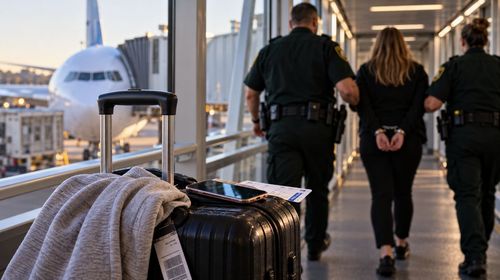
Not diverted. Not rerouted. Not landed in the nearest city so someone could deal with whatever was happening in seat 9D. The plane flew its route, touched down at 11:23 p.m., and was met by law enforcement who arrested the woman on the jetway.
We have questions. The answers, somehow, make this weirder.
The ACARS Message Nobody Expected to Send
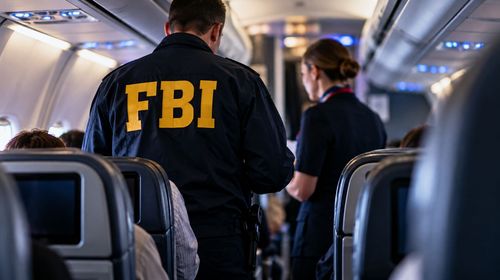
When the lead flight attendant clocked what was happening in row 9, she did what the training manual says: she notified the cockpit through ACARS — the real-time data link airlines use to communicate with ground operations. The message was logged at 2:14 a.m. UTC. It is now public record. It reads, in the clipped, acronym-heavy style of official aviation communications:
"FA1 REPORTS THAT PAX IN SEAT 9DEF HAS TAKEN OFF ALL HER CLOTHES AND WAS SEEN BY OTHER PAX [touching herself] IN AN INDECENT MANNER. FOM SAYS THIS MUST BE REPORTED TO IOC/OSM AND HAVE LAW ENFORCEMENT."
Whoever typed that message had a very specific job to do that night that was not in the original job description.
The Flight Operations Manual was followed. The Integrated Operations Center was notified. Law enforcement was arranged. What didn't happen — and this is the part people keep getting stuck on — was a diversion.
Why the Plane Didn't Land Immediately
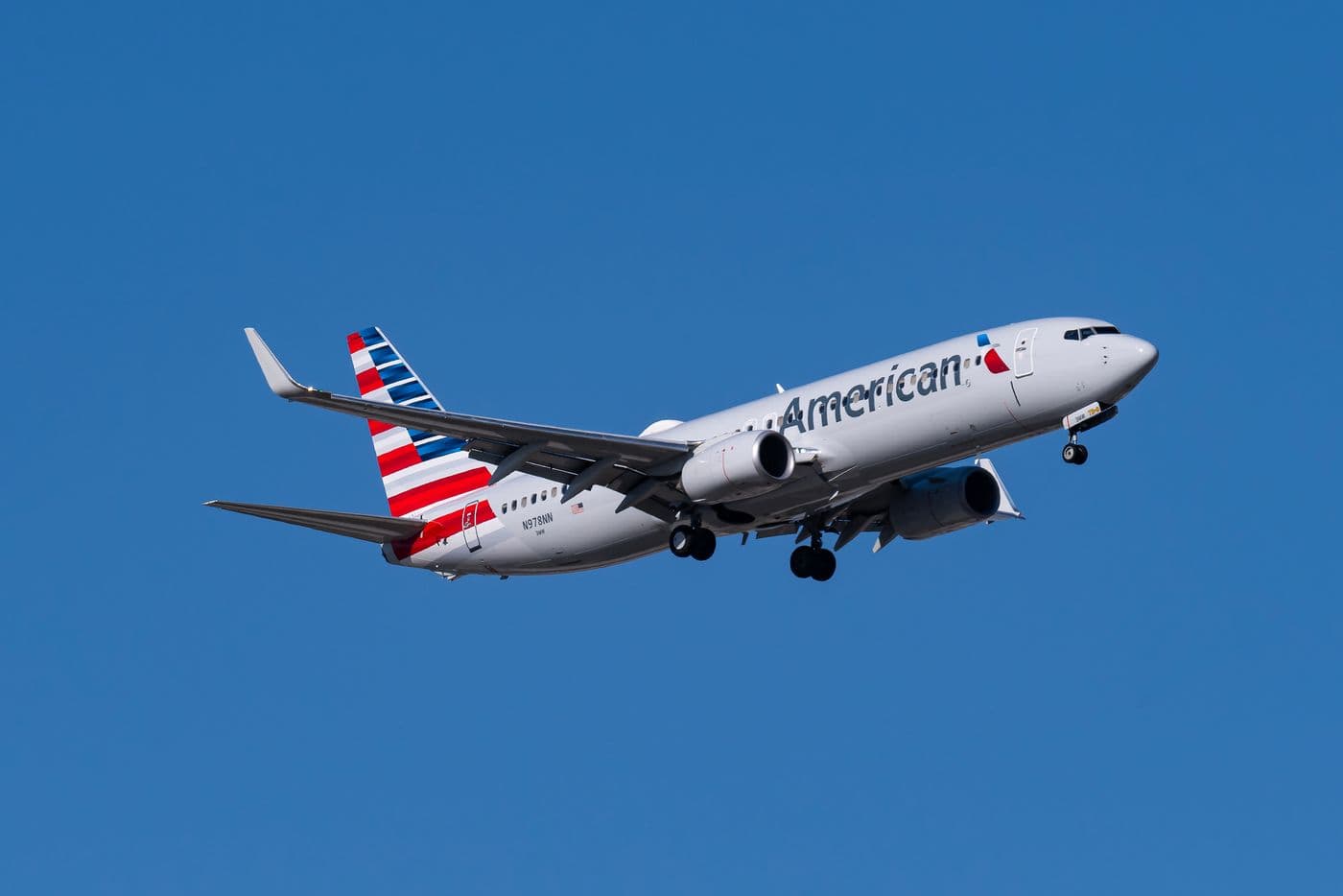
Because here's the thing: diverting a commercial aircraft is not a casual decision. It costs the airline tens of thousands of dollars, strands 200 passengers who now need rebooked connections, and is reserved for situations where continuing the flight creates an active safety risk. A medical emergency. A credible bomb threat. A passenger who is physically attacking the crew.
A woman who has decided that 35,000 feet is an appropriate venue for a one-person show is alarming, disturbing, and something the FAA will absolutely investigate — but she was not, by the operational definition that matters at that altitude, a safety threat to the aircraft.
So the plane flew to Miami. Law enforcement was ready at the gate. She was arrested. American Airlines added her to the no-fly list.
The flight arrived 23 minutes late.
1,100 Incidents. This Was One of Them.
The September 11 incident is not even particularly unusual in the context of 2026 commercial aviation. The FAA has logged more than 1,100 unruly passenger incidents this year. That is not a typo. Eleven hundred.
"Who does that?" one Baltimore woman told local news. "I don't know why that would be okay in any public space."
With respect: this is the wrong question. The right question is why it keeps happening. And the answer involves a specific cocktail of anxiety, alcohol, sleep deprivation, altitude, and whatever it is that makes a small percentage of people conclude that the rules of human society do not apply at 36,000 feet.
What Actually Happens to You

Federal charges. That's what happens. Airline cabins are "special aircraft jurisdiction of the United States," which means federal law applies regardless of where you took off or landed. Lewd, indecent, or obscene acts in aircraft jurisdiction carry penalties of up to 90 days in federal prison and fines of up to $5,000. The FAA can separately issue civil penalties of up to $37,000 per violation.
Add a lifetime ban from the airline. Add the federal record. Add the fact that you were arrested in front of 200 people who all immediately texted someone about it.
The woman in seat 9D was 29 years old. She is from Maryland. Her name is in the court documents. The 200 other passengers on Flight 1779 have a story they will be telling at dinner parties for the rest of their lives.
She did not receive a complimentary upgrade.