
If you've spent any time on social media, you've seen the facelift content. Women documenting their journeys: the before photos, the carefully staged "day one" reveals with minimal bruising, the triumphant day-ten glow-ups. Michele Promaulayko, a health journalist, watched hours of it before flying to Palm Beach to spend a week as her friend Robin's post-op caretaker.
The account she wrote for Allure afterward — covering everything FaceliftTok leaves out — is a different kind of document. Promaulayko is 55 years old. When she left Florida, she had gone from the "maybe someday" camp to the "probably someday" camp. Here's what changed her mind.
The Budget Nobody Plans For
The base cost of a facelift from an experienced US surgeon typically ranges from $40,000 to $50,000. That number does not include the consultation fees (often $250 to $1,000 each, with the cost applied toward surgery if you proceed), the required post-op nurse (at $100 to $200 per hour for a minimum of 18 to 24 hours), or the hotel stay near the surgical suite. Robin's nurse and hotel costs alone added $6,400.
Robin did 13 consultations before choosing her surgeon — more than most people — but even four consultations, at the lower cost estimate, adds $1,000 to $4,000 before a scalpel is lifted. The surgeon who performed Kris Jenner's facelift reportedly now charges $400,000. The median US home price is also roughly $400,000. These two numbers being the same is either a coincidence or a comment on something.
Day 3 Is When It Gets Worse
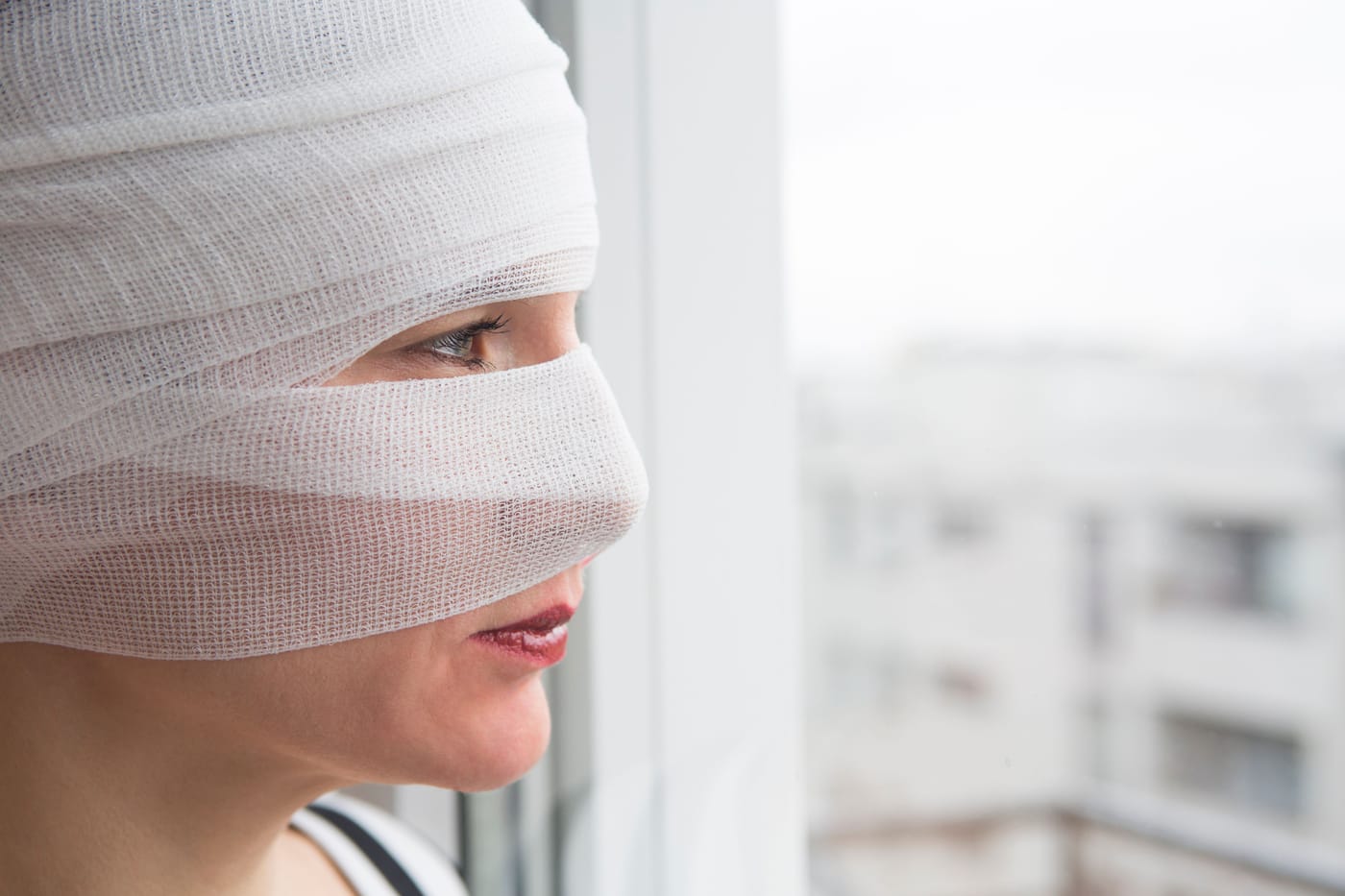
The swelling timeline is one of the most widely misunderstood aspects of facelift recovery, and one of the most important things to know in advance. You wake up the morning after surgery looking, as Promaulayko describes it, "decent, all things considered." Then things get worse.
On day two, the face becomes very puffy and swollen — blood vessels that dilated immediately after surgery to deliver healing fluids to the tissue begin to constrict again after about 72 hours. Facial edema peaks around day three and then begins to gradually resolve as the lymphatic system starts draining the accumulated fluid. For Robin, the swelling gave her face a "full, taut and shiny" quality that Promaulayko compared to "a Cabbage Patch doll who'd done her skin slugging routine with Vaseline."
The bruising — which was minimal for Robin — turned yellow and faded entirely by days seven and eight. The sutures and staples are the "Frankenstein phase": 400 sutures and 30 scalp staples for Robin's procedure. Some patients tape cardboard over their mirrors before leaving for surgery to avoid seeing the aftermath. Robin refused to look at herself at all until day six.
400 Stitches and No Pain
The detail that consistently surprises people is that a deep-plane facelift, for most patients, is not painful. The technique elevates the skin and underlying tissue together in natural anatomical planes, and the small sensory nerves stretched during the process cause temporary numbness throughout the recovery. Robin described the sensation as wearing an "extremely tight chin strap" — tightness and pressure, not true pain. She used oxycodone and Valium for comfort and anxiety management, but not because she was in agony.
For the first two days, Robin needed her nurse to help her to the bathroom. She ate pudding and protein shakes with a silicone-coated baby spoon because she couldn't open her mouth wide. The nerves regenerate slowly — approximately one millimeter per day — so full sensation in the cheeks, ears, and neck returns over weeks and months.
The Real Reason People Get Facelifts
The observation that changed Promaulayko's own perspective on the procedure had nothing to do with aesthetics. Robin, before surgery, had noticed that the changes to her face were making her look angry even when she wasn't. The jowling and brow heaviness that comes with aging had altered her resting expression in a way that no longer matched how she felt inside.
"I felt my mood had shifted so much as a result," Robin told Promaulayko. "Post-facelift, I genuinely feel happier."
The research supports this experience. Multiple studies report improved well-being and overall life satisfaction when measured more than a year after a facelift — not because people look better, but because the disconnect between internal self-image and what others see has been closed. The surgery isn't really about looking younger. It's about looking like how you feel.
Before leaving Florida, Promaulayko booked her own consultation with Robin's surgeon. He told her what her procedure might involve. She left still in the "probably someday" camp — but only barely.














