

Cannabis is known to cause the munchies. It raises appetite, can increase caloric intake by hundreds of calories per session, and should, by that logic, contribute to obesity and the metabolic conditions that follow from it.
Which makes the finding from a new study of 91,002 adults genuinely confusing.
Published in the September 2026 issue of Nutrition, Metabolism and Cardiovascular Diseases, the research from Zhejiang University analyzed UK Biobank data on cannabis use and metabolic health. Among participants who had used cannabis, the results showed a 18% lower risk of developing type 2 diabetes compared to those who had never used it — and a 40% lower likelihood of obesity.
"Cannabis use was associated with modestly lower observed risks of metabolic disease overall, hypertension, type 2 diabetes, and obesity," the study's authors concluded.
The Munchies Paradox
The finding sits in direct tension with what most people know about cannabis. The acute appetite-stimulating effect of THC is well-documented. Chronic cannabis users consume, on average, hundreds of additional calories per use session. By straightforward metabolic logic, this should translate to higher rates of obesity and diabetes over time.
The data consistently says the opposite. Multiple studies across different populations have found that cannabis users tend to have lower BMI, smaller waist circumferences, and lower rates of obesity than non-users — even accounting for other lifestyle differences.
Researchers have a few competing hypotheses for why. One involves the endocannabinoid system — the same system THC works through — and its role in regulating insulin sensitivity and glucose metabolism. There is evidence that cannabis use can improve insulin sensitivity and lower fasting insulin levels, which would directly reduce type 2 diabetes risk independent of weight. Another hypothesis is that cannabis users may substitute it for alcohol in ways that improve their metabolic profile overall, since heavy alcohol consumption is itself a significant driver of metabolic disease.
What the UK Biobank Study Found

The analysis examined 91,002 participants — 23,181 who reported having used cannabis and 67,821 who reported never using it. All were free of the metabolic conditions being studied at baseline. Researchers used multivariable models to account for factors that could influence metabolic health.
The findings: compared to never-users, cannabis users had a 6% lower overall risk of metabolic disease, a 7% lower risk of hypertension, and the headline figure — an 18% lower risk of type 2 diabetes. Among heavier consumers, the associations were stronger.
The study is observational and cannot establish causation. People who use cannabis may differ from non-users in ways that are difficult to fully account for statistically, and the finding may reflect unmeasured lifestyle or behavioral differences rather than a direct effect of cannabis on metabolism.
The Competing Finding
This study does not exist in a vacuum. A separate large analysis — this one of more than 4 million adults — presented at the European Association for the Study of Diabetes found that cannabis use was associated with a significantly higher risk of developing diabetes.
The apparent contradiction resolves, in part, by looking at who was studied. The four-million-person analysis focused specifically on people with cannabis-related clinical diagnoses — ranging from problematic use to dependence and intoxication. The UK Biobank study included any reported use. Heavy, problematic cannabis use carries different metabolic implications than moderate use, a distinction that may explain much of the divergence between findings.
What This Means for the Science
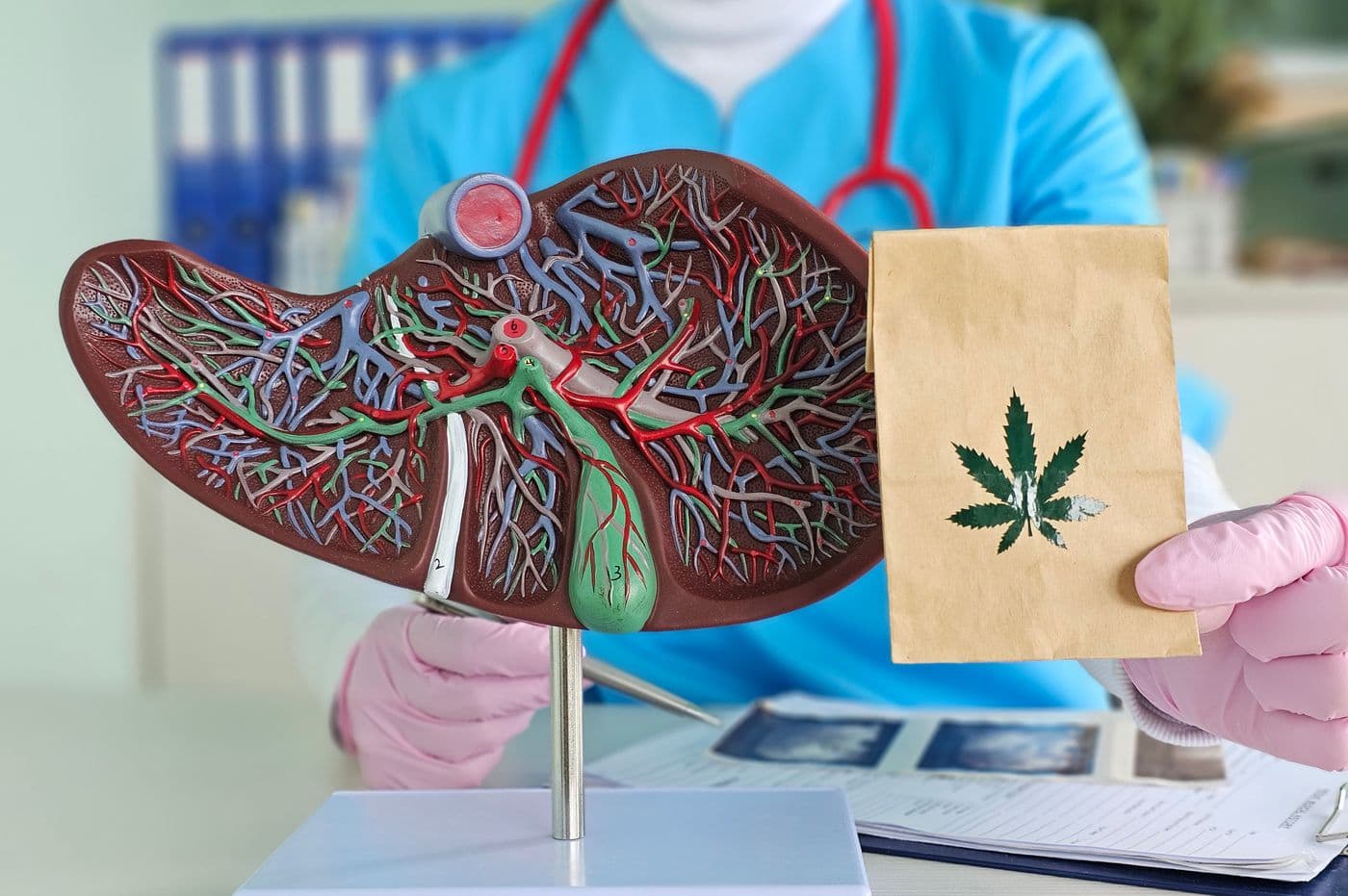
The picture that's emerging from the cannabis-metabolic health literature is not "cannabis protects against diabetes." It is more like: the relationship between cannabis use and metabolic health is dose-dependent, use-pattern-dependent, and not yet fully understood.
Research consistently shows that moderate cannabis use carries a different risk profile from heavy cannabis use disorder. The 18% lower diabetes risk finding is interesting and worth further investigation. It is not a prescription.
"We don't fully understand why some people and not others have negative consequences to using cannabis," Yale psychiatrist Dr. Deepak D'Souza has noted. The same appears to be true of the positive associations. The endocannabinoid system is deeply involved in metabolic regulation. How cannabis interacts with that system in ways that affect long-term disease risk is a question the science has not yet answered.