
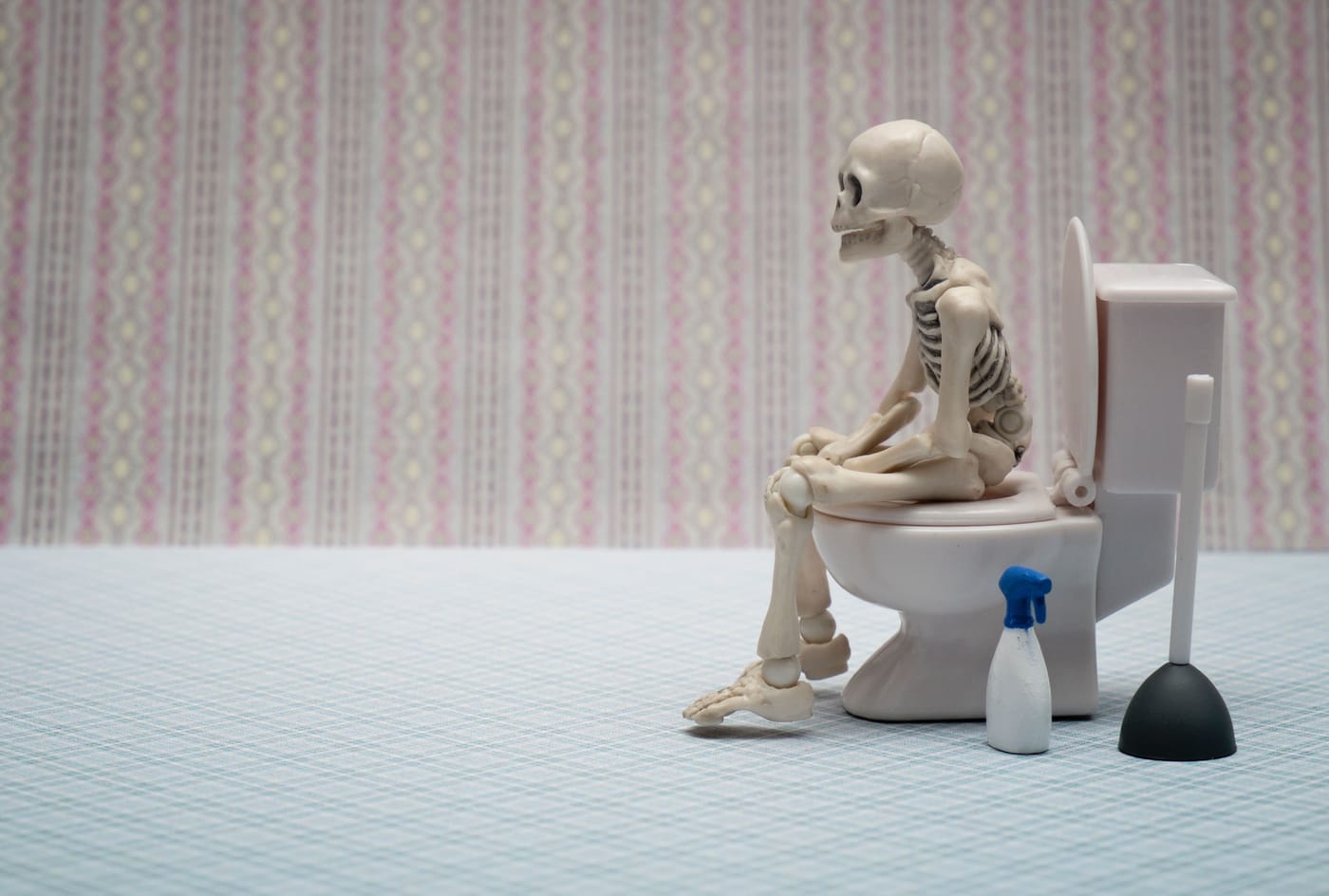
Every day, you use what is statistically one of the most dangerous pieces of equipment in your home, without giving it a second thought. According to the CDC, up to 80% of home falls happen in the bathroom. There are roughly 40,000 toilet-related injuries in the United States every year. And at least two historically significant people have died on one.
The Most Dangerous Room You're Not Thinking About
The kitchen gets the reputation — sharp knives, open flames — but the bathroom is where the real hazards live. Hard tile floors, wet surfaces, and the physical act of getting up and down from a low fixture multiple times a day create a consistent injury pattern that disproportionately affects people over 65. Falls in the bathroom are 2.5 times more likely to cause serious injury than falls in other rooms.
Babies can drown in toilet bowls. Seniors can fall after standing, hit their head on the tile, and never get up. These are not dramatic or unusual scenarios — they happen with enough regularity that home safety researchers treat bathroom design as a legitimate public health issue.
When Straining Kills: The Valsalva Maneuver

Here is the one that surprises people. When you strain during a bowel movement and hold your breath — particularly if you're constipated — you perform what medicine calls the Valsalva maneuver. The sustained pressure briefly cuts off blood return to the heart, spikes your blood pressure, and when you release, sends a sudden surge of blood back into circulation. For most healthy people, this is unremarkable. For someone with an underlying heart condition, it can trigger a fatal arrhythmia or cardiac event.
King George II died on October 25, 1760, when his valet heard a loud noise and found him collapsed next to his toilet. Historians believe an aortic dissection — consistent with the sudden pressure of straining — was the cause.
Elvis Presley was found on his bathroom floor at Graceland on August 16, 1977, reportedly after a period of significant straining. His full autopsy report remains sealed until 2027, but medical historians have noted that his known history of chronic constipation and compromised heart health made the Valsalva mechanism plausible. Two famous people. The same room. The same basic mechanism.
Doctors recommend taking chronic constipation seriously — not as a comfort issue but as a cardiovascular one — and note that squat-style toilets allow waste to pass with significantly less straining than the seated Western design, which places the rectum at an angle that requires more effort.
The Erfurt Latrine Disaster of 1184
Before modern plumbing, toilets were pits — shafts dug deep into the ground, sometimes connected to underground water. The engineering failure modes were significant.
In July 1184, King Henry VI of Germany convened a meeting of nobles at a cathedral in Erfurt to settle a land dispute. The wooden floor of the hall — built over an underground cesspit used as a latrine — collapsed under the weight of the assembled company. Roughly 60 noblemen fell into the pit below and drowned. The king and the local archbishop survived because they had been seated in a stone alcove above floor level.
The Erfurt Latrine Disaster remains one of the most absurd mass casualty events in European history. It is also, structurally, a building inspection story.
A WWII Submarine Sunk by a Toilet
In 1945, a German submarine called U-1206 was deployed to the North Sea equipped with advanced high-pressure toilets designed to expel waste directly into the ocean. The flushing mechanism was complex enough to require specialist training. Eight days into its mission, the young captain attempted to operate the system without assistance and did it wrong.
Sewage backflooded into the submarine and saturated the batteries below, releasing chlorine gas throughout the vessel. The crew was forced to surface immediately. Three men drowned trying to escape the sinking ship. The rest were captured by Allied forces. The U-1206 was scuttled and sank — because of a toilet.
Assassins, Pythons, and the Case Against Outhouses
The historical record contains a few other notable toilet incidents worth mentioning. In 1076, Duke Godfrey "the Hunchback" of Lower Lorraine was assassinated by an attacker hiding in the pit beneath his toilet, who speared him from below while he sat. Medieval security, apparently, had some gaps.
In Thailand in 2016, a python emerged from a toilet bowl and bit a man mid-use. He survived. In parts of Australia, redback spiders are notorious for nesting under outhouse seats, and at least one man has been bitten in this manner twice — in the same year — on two separate occasions.
The toilet is a remarkable piece of engineering that most people take entirely for granted. It is also, demonstrably, worth paying a little more attention to.














