
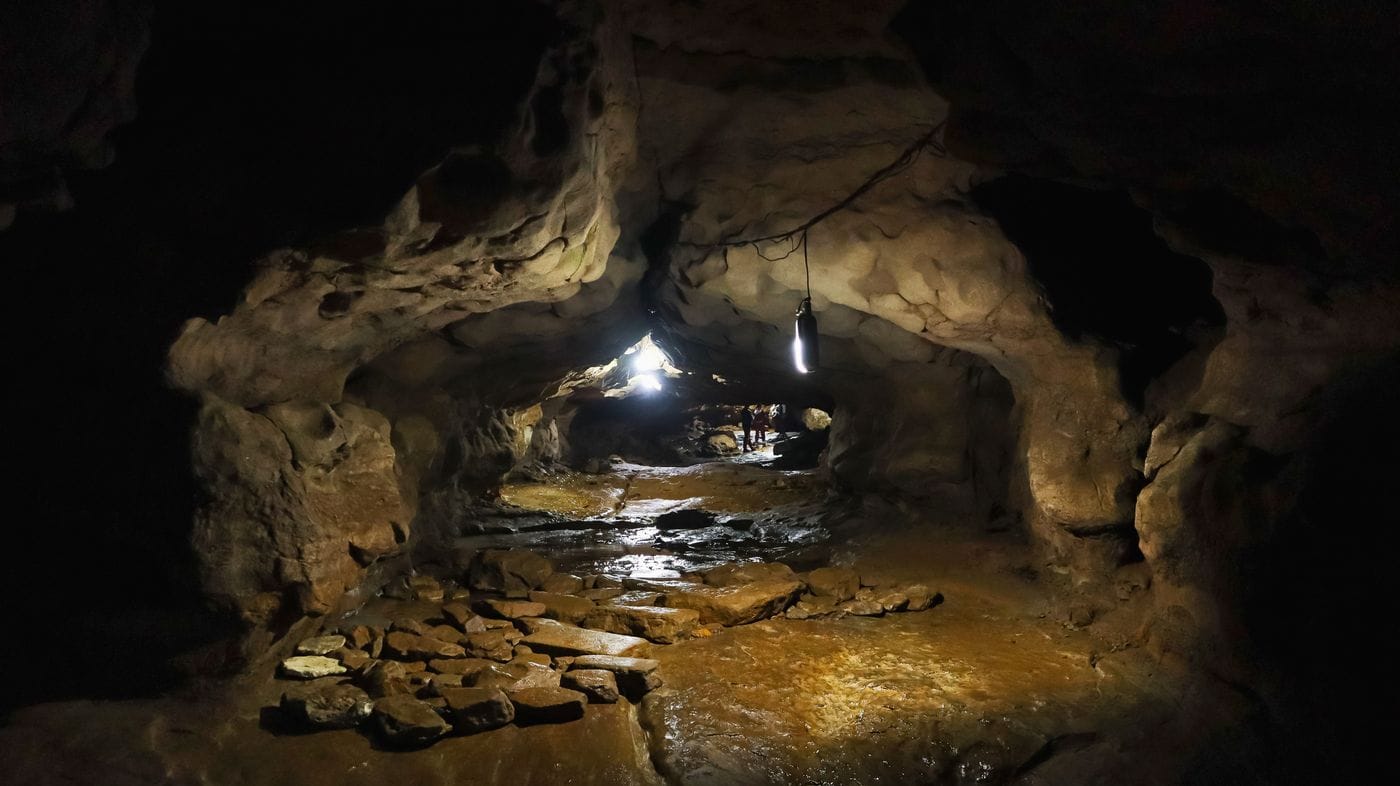
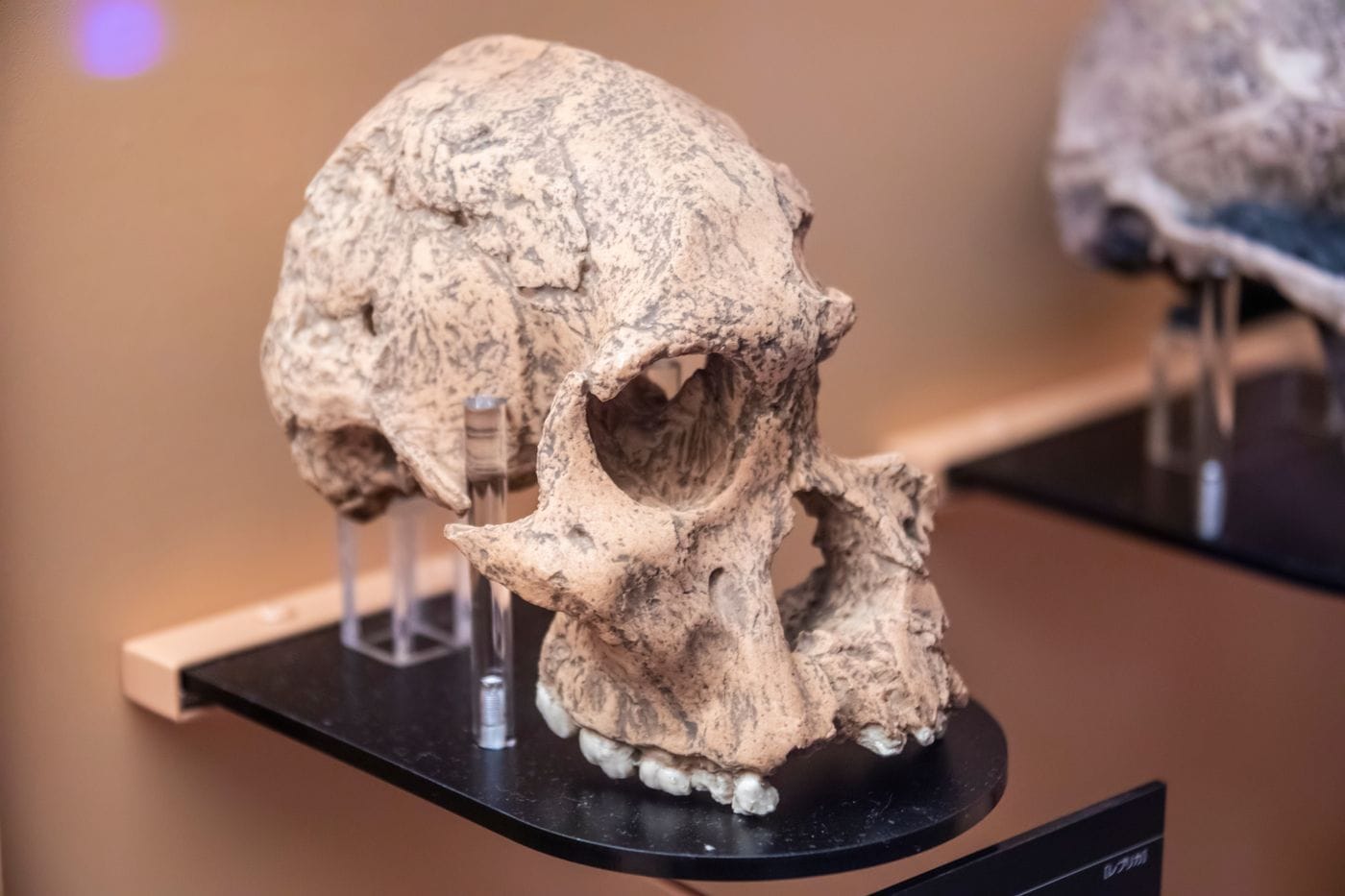
Deep in the Rising Star cave system outside Johannesburg, South Africa, lies a chamber that has become one of the most significant — and puzzling — archaeological sites in human evolution. It's accessible only through a narrow, twisting passage so tight that many researchers cannot physically squeeze through it. Since 2013, excavators have pulled more than 1,500 fossil fragments from that chamber, representing at least 20 individuals from an ancient human relative called Homo naledi.
A study published this month in the journal Cell has added a finding that nobody expected: every single individual in that cave was female.
An Already Weird Hominin, Now Weirder
Homo naledi had already occupied a strange position in human evolution before this discovery. The species lived approximately 300,000 years ago in South Africa and had a brain roughly one-third the size of a modern human brain — closer to a chimpanzee. Yet its hands, lower limbs, and face were strikingly human-like. And despite that small brain, researchers had previously concluded from physical evidence that Homo naledi deliberately buried its dead — a behavior long considered uniquely human, and one that would predate modern humans' burial practices by hundreds of thousands of years.
"The bottom line is this is a weird result from an already weird hominin," said Elizabeth Sawchuk, a bioarchaeologist and curator at the Cleveland Museum of Natural History.
Zero Male Markers Across 20 Individuals
The new finding came through protein analysis of dental enamel — a technique that had never previously been applied to Homo naledi fossils. Tooth enamel is the hardest tissue in the human body and preserves proteins for extraordinarily long periods. The research team, led by Palesa Madupe at the Max Planck Institute for Evolutionary Anthropology, searched for a specific protein called Amelogenin-Y, which is uniquely coded onto the male Y chromosome.
Across 23 teeth representing at least 20 individuals, the research team found no evidence of Amelogenin-Y in any sample. Every individual tested appeared to be biologically female.
Some of the larger skeletons in the collection had previously been tentatively identified as male based on their size. The protein analysis contradicted that assumption. "Our study helps resolve the long-standing mystery of why Homo naledi lacked significant variation," said Madupe. "It's probably because they could have all belonged to one sex."
The Three Possible Explanations
The research team is careful about what the finding proves — and what it doesn't. There are three plausible explanations for why no male markers were found in the cave.
The first is that Homo naledi practiced sex-segregated burial — that the species, for reasons unknown, deliberately buried its females separately from its males. Lee Berger, the National Geographic explorer in residence who led the excavations, described this as "cultural selection after death for burial by sex and perhaps gender" and argued that "the chance of [this] being a natural occurrence is one in a million."
The second is that males simply haven't been found at this particular site, and may be buried elsewhere. The Rising Star system contains multiple chambers; excavations are ongoing.
The third — proposed by researchers not involved in the study — is that the Homo naledi population carried a rare deletion of the AMELY gene, which would mean males exist but their remains test the same as females. This deletion has been documented in some living male humans and in at least one Neanderthal. For it to account for all 20 individuals, however, it would have to be remarkably widespread within the species.
"The only thing that has changed is that we have never seen a male," Berger said. "When and if we do, we will have to extend the description to include male sex characters and the likely extension of certain aspects of variation."
The Irony Nobody Could Ignore
The excavation of the Rising Star cave system has always required entering through a passage narrow enough to exclude most adult bodies. When Berger needed a team to navigate that passage and retrieve the fossils, he recruited primarily small, slender researchers — a group that turned out to be largely women.
The fossils of Homo naledi were first recovered by an all-female team of "underground astronauts." The new analysis has revealed, years later, that the fossils they were recovering were also all female.
"I think that's one of those great, beautiful ironies of science and exploration," Berger said.
What the cave contains, why it contains only females, and what this tells us about the behavior of an ancient species with a small brain and apparently complex cultural practices — these questions remain open. The chamber at Rising Star has been producing answers for a decade. It is still producing questions faster.














