
There is a new dating trend circulating on TikTok. It involves Gen Z men skipping showers, ditching deodorant, and sometimes wearing unwashed clothes before going on a date. The theory: allowing natural body odor to build up releases pheromones that make them sexually irresistible to women.
The trend is called pheromone-maxxing.
"Stopped washing my hair at all and now I unironically get more compliments on how it smells and looks," one user posted. "Pheromone maxxing is key."
Women, by and large, are responding with one word.
"Ewwwww."
What Pheromone-Maxxing Actually Is
The trend has its roots in the broader "looksmaxxing" community — a corner of social media where young men share techniques for optimizing physical attractiveness, ranging from jaw exercises and posture work to, in some cases, extreme dietary interventions and cosmetic procedures.
Pheromone-maxxing takes a specific hypothesis: that human males produce chemical signals called pheromones, that these pheromones are sexually attractive to women, and that showering and deodorant suppress them. The logical conclusion, for the committed practitioners, is that the less you wash, the more irresistible you become.
For the truly committed, "pheromone-maxxing" doesn't stop at skipping a shower. Some adherents have added preparations to their pre-date routine that include wearing clothes that haven't been washed in days, avoiding any scented products whatsoever, and — in the more extreme cases documented by Vice — drinking their own urine to "sweat out toxins."
Women encountering this trend in the wild have largely reached the same conclusion. One responding to a post on X said she'd "assume you're homeless." Another summarized: "'My ideal man? Lazy AND smelly,' said no woman ever."
What the Science Actually Says

The hypothesis has a kernel of truth in it. Scent does play a role in human attraction. Research has shown that humans produce individual chemical odors and that these can influence how others perceive them. The sweaty T-shirt study of 1995 is the most frequently cited evidence — participants preferred the scent of shirts worn by people with different immune-system genetics from their own.
But the leap from "scent influences attraction" to "smelling unwashed makes you irresistible" is where the science stops cooperating. "There is no evidence of a consistent and strong behavioral response to any human-produced chemical cue," Scientific American has noted. "To date, scientists have collected evidence for possible pheromone effects but have not definitively identified a single human pheromone."
A 2020 analysis of previous studies found no strong evidence that people prefer partners with different immune genetics or find their body odor more attractive. The human olfactory system is real; the specific claim that unwashed bodies are more attractive is not supported by the research.
What a Dermatologist Called It
Dr. Shereen Teymour, a board-certified dermatologist in New York, reviewed the trend for USA Today and arrived at a different name for it.
"Pheromone-maxxing takes a kernel of legitimate science — the fact that humans produce individual chemical odors and that smell can influence how we perceive other people — and stretches it into a conclusion the science doesn't support," she said.
As for the core practice: "Not showering isn't pheromone-maxxing. For the most part, it's bacteria-maxxing."
The distinction is important. What accumulates on the human body when you skip showers is not a concentrated cocktail of irresistible chemical signals. It is bacteria — specifically the bacteria that metabolize sweat and produce the compounds responsible for body odor. That odor is not your natural scent enhanced. It is your natural scent being processed by microorganisms.
What Actually Works
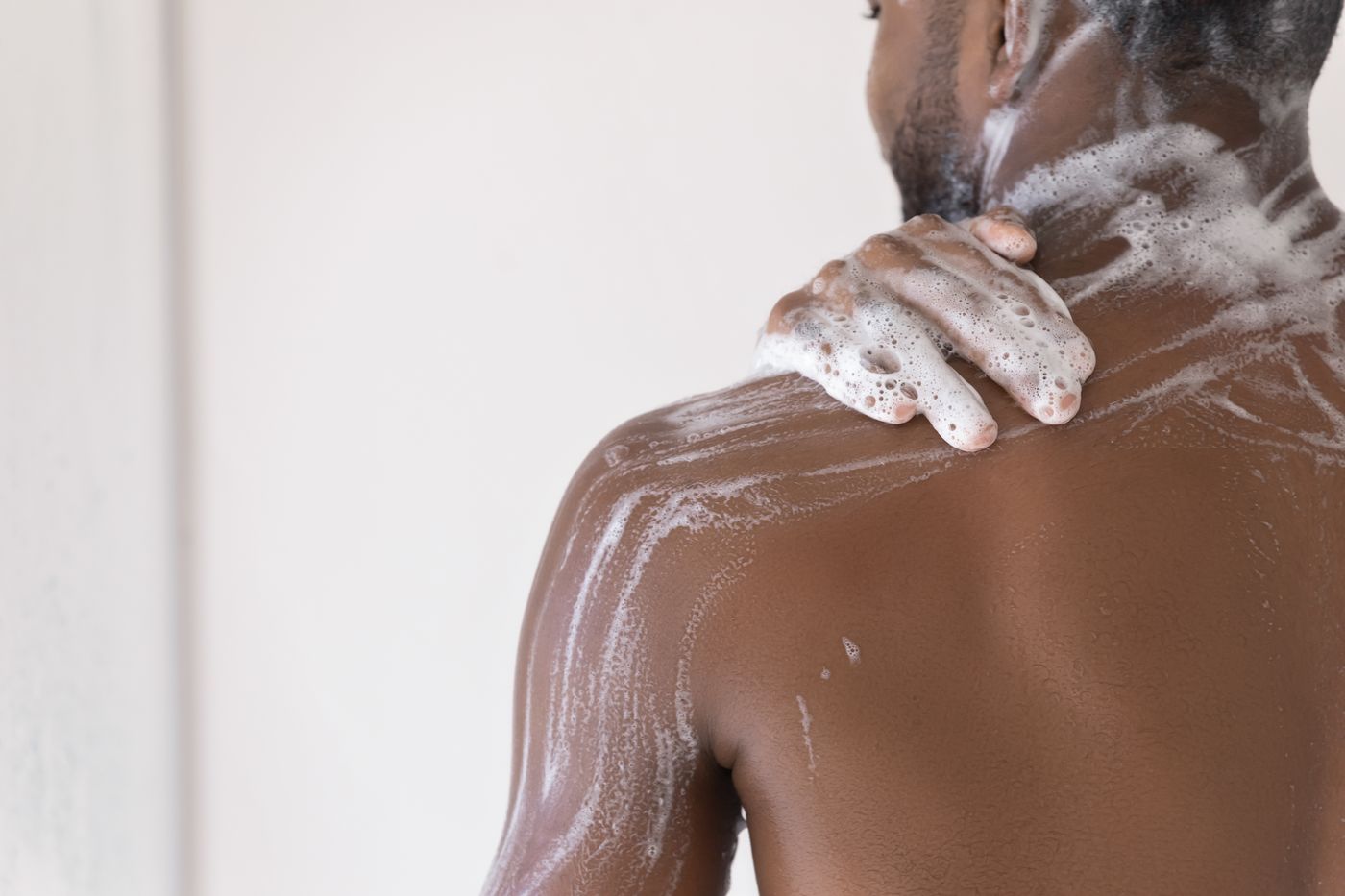
The actual science of scent and attraction is more nuanced — and more accessible — than pheromone-maxxing suggests. Strong smells associated with physical activity can register as attractive to intimate partners in established relationships, but researchers note this rarely translates to strangers. The underlying scent of a clean person — their individual chemical signature, unmasked by strong perfumes or suppressed by bacteria — is the thing that research most consistently links to attraction.
Teymour's advice: use a gentle cleanser, pay particular attention to areas prone to bacterial accumulation, and avoid overly hot water and harsh antibacterial soaps that can disrupt the skin microbiome. Antiperspirant reduces sweat; deodorant controls odor from the bacteria that process it.
"Ultimately, good hygiene doesn't mean eliminating every trace of your natural scent," she said, "or disrupting your skin microbiome."
Which is a substantially more complicated message than "don't shower." It is also, for the purposes of attraction, considerably more effective.