
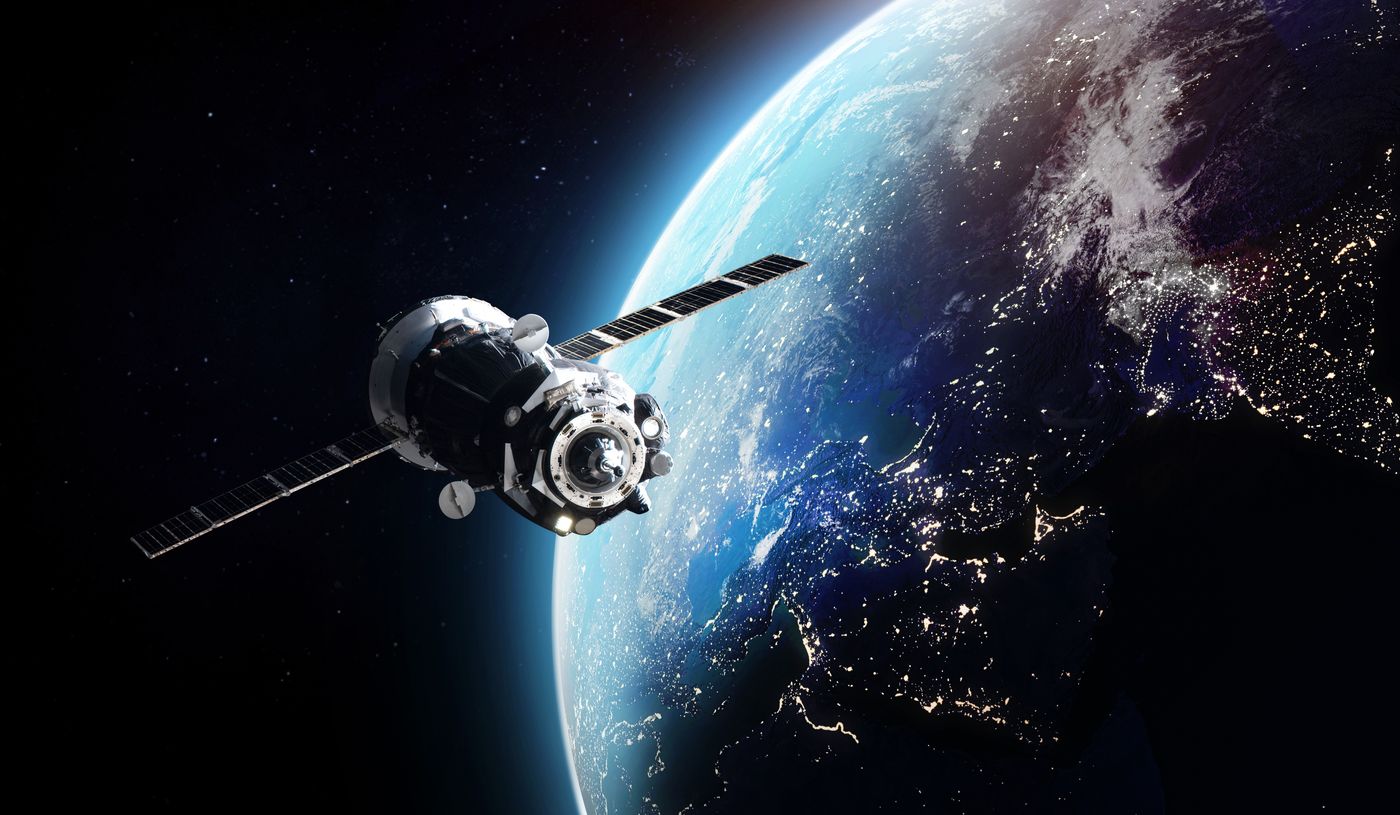
In 1980, cosmonaut Valery Ryumin made a note in his personal diary during a stint aboard a Soviet space station. "All the necessary conditions to perpetrate a murder," he wrote, "are met by locking two men in a cabin of 5 x 6m for two months."
Ryumin wasn't confessing. He was observing. And with civilian space travel accelerating, and missions to the Moon and Mars on the planning boards, the people who study forensic science have begun taking his observation very seriously.
A murder in space is not inevitable. It is, however, statistically likely to happen eventually — and almost every forensic tool we currently rely on was designed for a planet with gravity.
Why Almost Everything a Detective Relies on Changes in Space
BBC Science Focus recently profiled the emerging field of astroforensics — and the picture it paints of what a space crime scene investigation would actually look like is simultaneously fascinating and deeply problematic.
Start with blood spatter, the cornerstone of modern forensic investigation. Bloodstain pattern analysis uses the physics of fluid dynamics to calculate the trajectory of blood droplets and reconstruct what happened and where. It depends entirely on gravity.
Zack Kowalske, a forensic detective at the Roswell Police Department in Georgia and a PhD researcher in bloodstain analysis, ran the first-ever blood spatter experiment in microgravity aboard a parabolic research flight — a plane that creates brief periods of weightlessness by alternating between steep climbs and dives. During the freefall periods, a colleague squirted synthetic blood at paper.
In normal gravity, a blood droplet strikes a surface and spreads in a characteristic pattern that tells investigators the angle of impact. In microgravity, surface tension takes over — the droplet doesn't spread. It leaves behind a tiny, ambiguous blob. The trajectory information that would tell you where the violence happened, and possibly who was standing where, is simply gone.
Blood also behaves differently in flight: on Earth it curves downward. In space, it travels in straight lines indefinitely — until hitting a wall, then bouncing unpredictably, leaving trails that lead nowhere useful.
The Murder Scene Nobody Prepared For
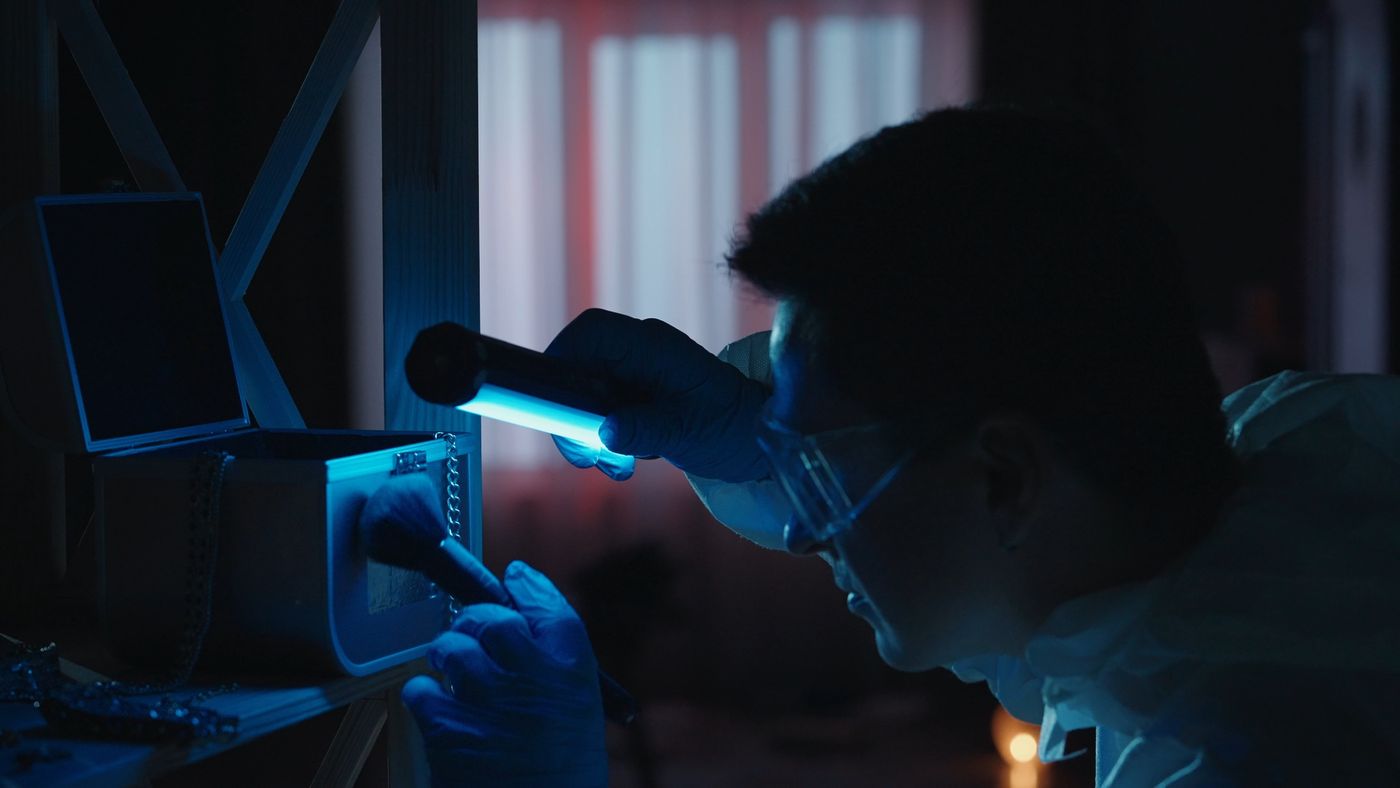
The complications compound. A victim's blood won't pool on the floor because there is no down. A murderer won't leave drips behind as they move through the station. Fingerprint powders — which float off surfaces on Earth under gravity — would become suspended indefinitely in the space station's air, becoming a hazard to the remaining crew. Conducting an autopsy, as Dr Mehzeb Chowdhury of Northumbria University notes plainly, presents a "rather alarming" challenge: in microgravity, bodily fluids escape and float.
Time of death, one of forensics' most powerful investigative tools, would be nearly impossible to determine in space. On Earth, blood pools predictably after the heart stops, and decomposition follows a reliable sequence driven by microbes and invertebrates. The ISS has far fewer microbes and essentially no decomposing invertebrates. A body would decay far more slowly — and the markers investigators use to establish a timeline would be unreliable.
DNA evidence? Degrades faster due to solar radiation. Gunshot residue? Floats through the station's air before eventually being sucked into ventilation filters — where it could still be retrieved, though with far less specificity about where the shot was fired.
The Problem Nobody Wants to Say Out Loud
Then there's the impartiality problem, which Chowdhury identifies as perhaps the most significant challenge of all. In a space murder investigation, everyone aboard the station is simultaneously a suspect and the only available investigator.
"Otherwise, any kind of investigation or outcome that comes from it will be tainted," he says. The solution being developed: robotics, AI, and remote imaging systems that can document crime scenes without human contamination of evidence.
Chowdhury built a prototype of exactly this — a 360° remote imaging robot called MABMAT, designed to record a crime scene so completely that Earth-based experts can analyze it virtually long after the physical evidence has shifted. Equipped with hyperspectral imaging and high-resolution 3D fingerprinting, such a system could collect prints without releasing particles into the air.
What the Field Is Actually Building

Astroforensics is a real field now, with real published research and researchers actively asking NASA and space agencies for dedicated funding. The work done on the parabolic flights is a start, not a conclusion.
"We really need to have dedicated research in this area," says Chowdhury. The goal isn't morbid. It's infrastructural: building the legal and forensic frameworks before civilian space travel creates the situations that will require them.
"We are, by nature, a very violent species," says Kowalske. "So it's not unreasonable to hypothesise that we'll be a violent species out among the stars."
Ryumin wrote that in a diary in 1980. Nobody built the tools then.














