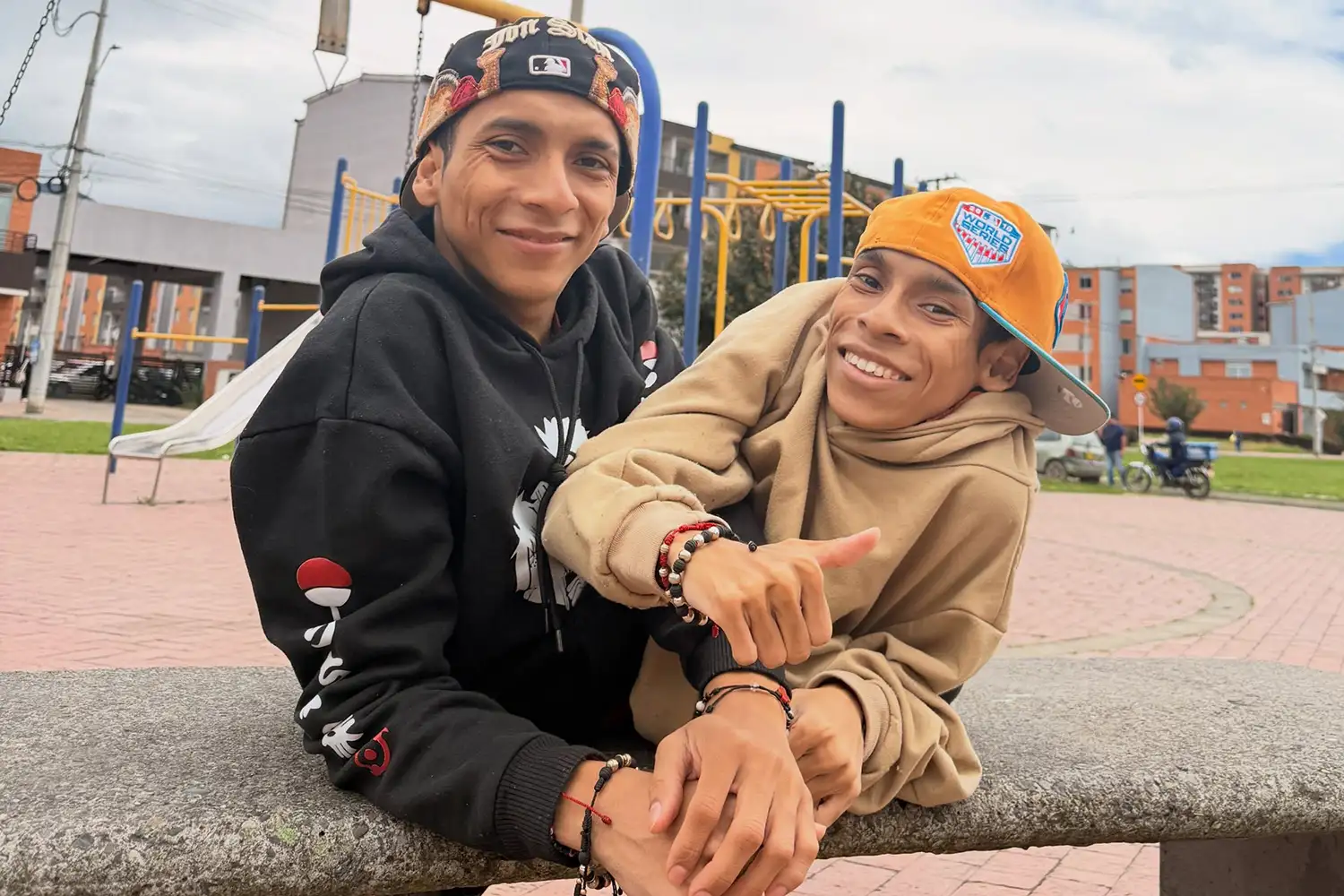
They had been in Colombia for months learning to walk. Days before they died, they posted a video of themselves standing without assistance — a milestone they had been working toward for years.
José Luis and José Armando Cevallos, 27-year-old conjoined twins from Ecuador, died on October 15. They had 837,000 followers on TikTok and had spent years documenting what daily life looks like when you share a body with another person.
What happened in the final hours was reported by their close friend Fernando Carrillo. José Luis began feeling unwell. He suffered cardiac arrest and was hospitalized. Doctors stabilized him.
Minutes later, José Armando had a heart attack. Both brothers died.
"José Armando took José Luis with him," Carrillo said. "They were born together and died together."
Who They Were
José Luis and José Armando Cevallos built their platform doing something simple and radical at the same time: they showed people what their life actually looked like. Not the inspirational highlight reel. Not the tragedy narrative. Just two brothers who happened to share a body, navigating a world that wasn't built for them, with a humor and warmth that people across 80 countries apparently needed to see.
Over 600K people followed them on TikTok. They documented everything — the daily logistics, the rehabilitation sessions, the humor, the frustration, the moments that were just two brothers who loved each other doing brother things.
José Luis had said at one point: "If we were born again, we would be conjoined twins." José Armando called sharing his life with his twin "the most beautiful gift God had given me."
They meant it.
What They Were Working Toward
The brothers had traveled to Colombia earlier this year to undergo specialist rehabilitation treatment. The goal: to eventually walk independently. For conjoined twins who had never walked without assistance, this was not a small thing. It was the kind of goal you work toward for years, document every step of, and share with the thousands people who want to watch you succeed.
Days before they died, they posted a video of themselves standing on their own. A few seconds of footage — unsteady, triumphant, exactly the kind of moment their followers had been waiting for with them.
A few days later, José Luis felt unwell. Then cardiac arrest. Then stabilization. Then José Armando, minutes later.
Why One Heart Attack Can Trigger Another in Conjoined Twins

This is the medical dimension that people are trying to understand.
Conjoined twins often share circulatory systems to varying degrees, depending on how they are joined. When one twin undergoes a severe cardiac event — the kind of systemic shock that cardiac arrest produces — the physiological stress on the shared system can be catastrophic for the other.
It is not that one twin's heart gives out and the other follows out of grief. It is more physiological than that: the acute hemodynamic collapse that comes with cardiac arrest in one twin creates a level of systemic stress that the other twin's cardiovascular system, already under strain, cannot absorb.
Doctors stabilized José Luis. That stabilization process — the interventions, the medications, the physical demands of resuscitation — is itself a massive physiological event. José Armando's heart, dealing with the shock of his brother's emergency alongside whatever cardiac stress he was experiencing himself, gave out minutes later.
They didn't survive separately because in the most literal sense, they were never separate.
What Their Family Said
Their brother Damián told the press their parents were "devastated." The family asked for privacy.
The tribute posted on their Instagram account read: "With profound sorrow, we share this official statement to announce the passing of our beloved Siamese Twins of Ecuador. Their story, their smiles, and their outlook on life left an indelible mark on many hearts. We sincerely thank everyone who accompanied them, supported them, and helped them achieve their dreams."
The Archdiocese of Guayaquil and local officials in Ecuador issued condolences. The response online from their followers — 837,000 of them — was immediate and sustained.
They had just been standing. Days before, they had been standing.