A customer received a warm delivery of deli meat on October 1. They complained. The company investigated. The investigation revealed that a warehouse cooler had been experiencing temperature deviations — meaning the meat inside had potentially been stored at unsafe temperatures for an unknown period.
That company is Kayem Foods. The amount recalled: 1,584,361 pounds.
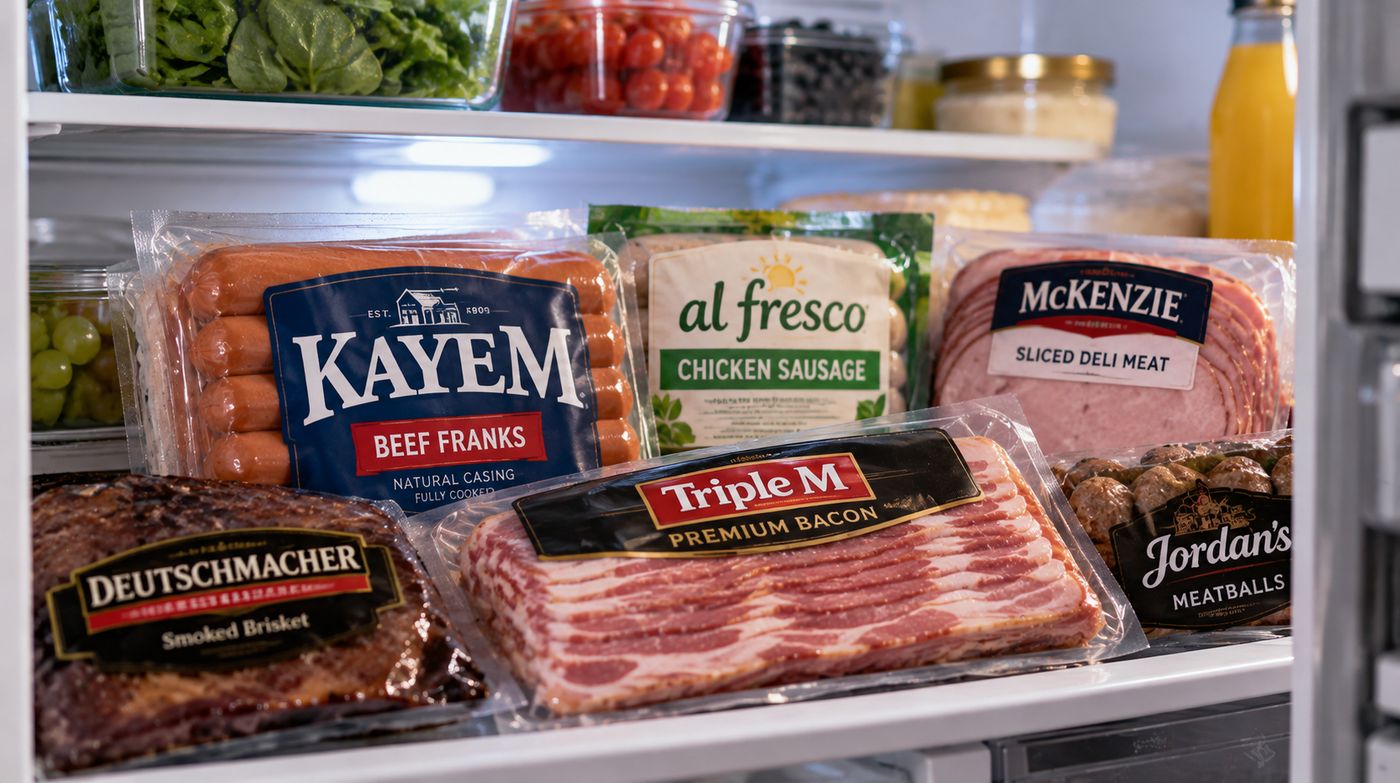
That's hot dogs. Bacon. Bratwursts. Smoked brisket. Corned beef. Meatballs. Chicken sausages. Sliced deli meats. Produced between March 31 and October 7 of this year. Shipped to retail and foodservice locations nationwide — and to Hong Kong.
The USDA classified this as a Class I recall — the highest risk designation. Class I means there is "a reasonable probability that the use of or exposure to a violative product will cause serious adverse health consequences or death." No confirmed illnesses have been reported yet. That "yet" matters.
What Brands Are Affected
The recalled products were sold under several brand names that are likely sitting in your refrigerator right now. They include:
Kayem, Al Fresco, McKenzie, Triple M, Deutschmacher, and Jordan's, among others. The products bear establishment numbers "EST. M/P 7839," "EST. P 20935A," or "EST. M 9520" inside the USDA mark of inspection.
The full product list — including labels and UPC information — is available on the USDA's FSIS recall page. The list is long. The affected items were sold at major grocery retailers nationwide, including Walmart.
Products were produced between March 31, 2026 and October 7, 2026. If you have any of the listed products with those establishment numbers and production dates, the USDA's advice is direct: do not eat them. Discard or return to the store where purchased.
Why Temperature Matters for Ready-to-Eat Meat
Ready-to-eat meat products — hot dogs, deli meat, bacon — are called that because they don't require further cooking. You eat them as-is, or you heat them briefly. The safety assumption is that the processing and packaging have made them safe to consume.
Temperature abuse breaks that assumption. When ready-to-eat meat is stored at improper temperatures, bacteria that may have been present can multiply to dangerous levels. The pathogens of particular concern in ready-to-eat meat products include Listeria monocytogenes, which can cause listeriosis — a serious infection particularly dangerous for pregnant people, older adults, and people with weakened immune systems.
The USDA has received no confirmed illness reports connected to this recall. That doesn't mean the product is safe — it means no one has yet connected an illness to this specific batch. Listeria symptoms can take up to 70 days to appear after exposure.
What to Do Right Now
According to the USDA FSIS and Today's reporting on the recall, consumers should:
- Check their refrigerator and freezer for any Kayem, Al Fresco, McKenzie, Triple M, Deutschmacher, or Jordan's products produced in the affected date range
- Look for the establishment numbers EST. M/P 7839, EST. P 20935A, or EST. M 9520 inside the USDA mark of inspection on the packaging
- If your product matches — do not eat it. Discard it or return it to the retailer for a refund
If you have questions, the USDA's Meat and Poultry Hotline is available at 1-888-MPHotline (1-888-674-6854). You can also submit questions online at AskFSIS.usda.gov.
A warehouse cooler ran warm. A customer noticed warm deli meat on a truck. 1.58 million pounds of product is now recalled. Check your fridge before dinner tonight.