
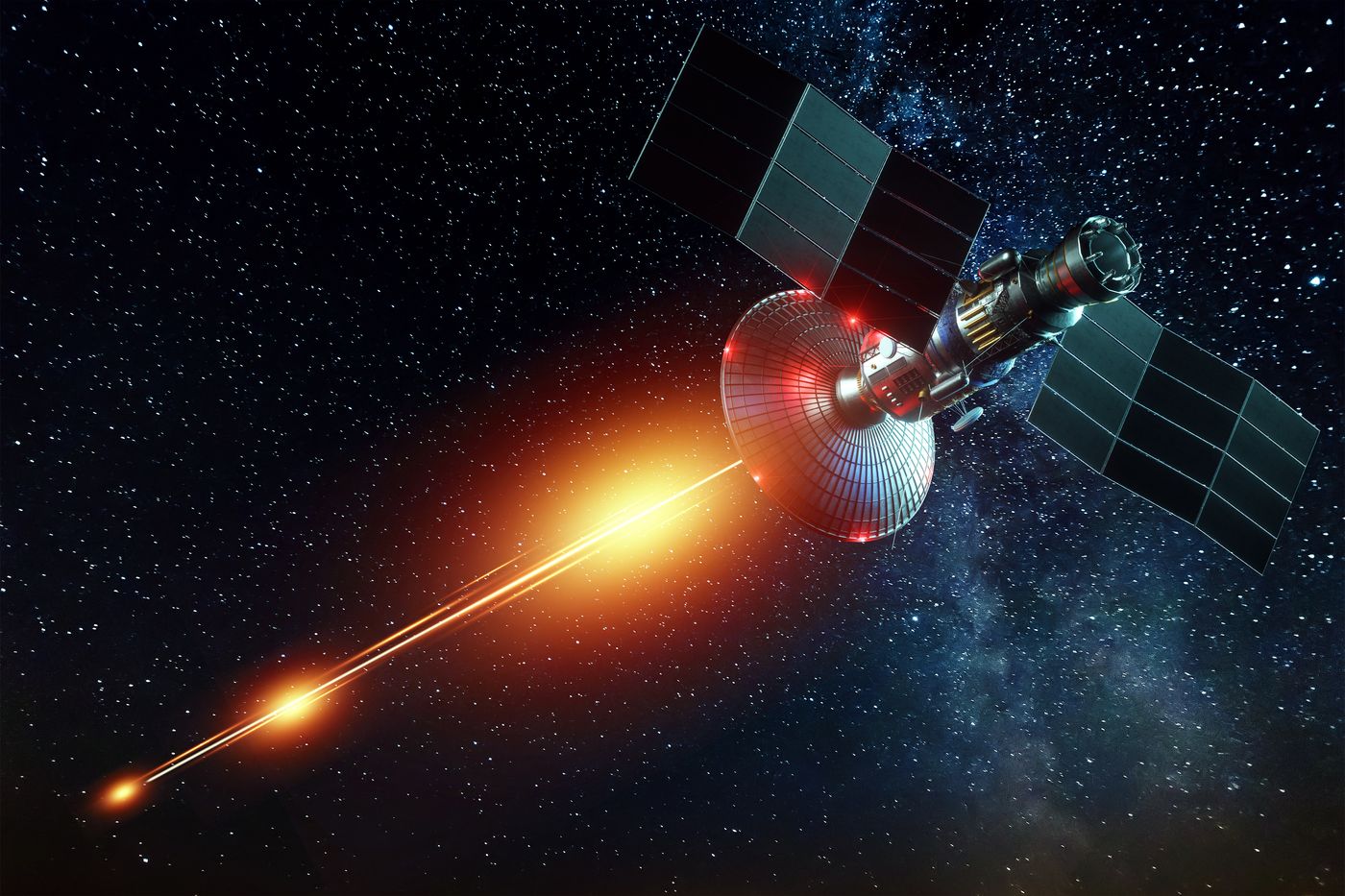
For decades, when military officials were asked whether the United States had weapons in space, the answer was careful, hedged, and uninformative. Officials cited national security concerns. They talked about deterrence. They declined to confirm or deny specifics.
On Sept. 15, 2026, that changed.
Air Force Secretary Troy Meink stood at the Air, Space and Cyber Conference in National Harbor, Maryland, and said it plainly: "The United States now has, on orbit, space-control weapons, capable of defending the joint force against hostile adversaries."
It was the first time any senior US official had publicly acknowledged that American weapons are currently deployed in Earth's orbit. Meink confirmed afterward that the disclosure was deliberate — his words, he said, were "very well thought out."
What Was Actually Admitted
The acknowledgment is notable for what it said and for what it didn't.
What it said: the US Space Force has weapons in orbit right now, capable of offensive and defensive action against adversary satellites and space-based systems.
What it didn't say: what kind of weapons, how many, where they are, or how long they've been there. "Space-control weapons" is the category. The Pentagon has not specified whether these are kinetic weapons — satellites capable of physically destroying or disabling other satellites — electronic warfare systems, directed-energy weapons like lasers, or cyber capabilities that can infiltrate and disable adversary systems. The answer may involve all of the above.
The US has been publicly accusing Russia and China of deploying weapons in space for years. In 2024, the US warned that Russia had deployed a satellite capable of attacking other satellites. That same year, officials warned of Russian plans to place a nuclear-capable payload in orbit. Monday's acknowledgment puts the US in the same category it had been accusing others of occupying.
Why This Matters — and Why It's Alarming
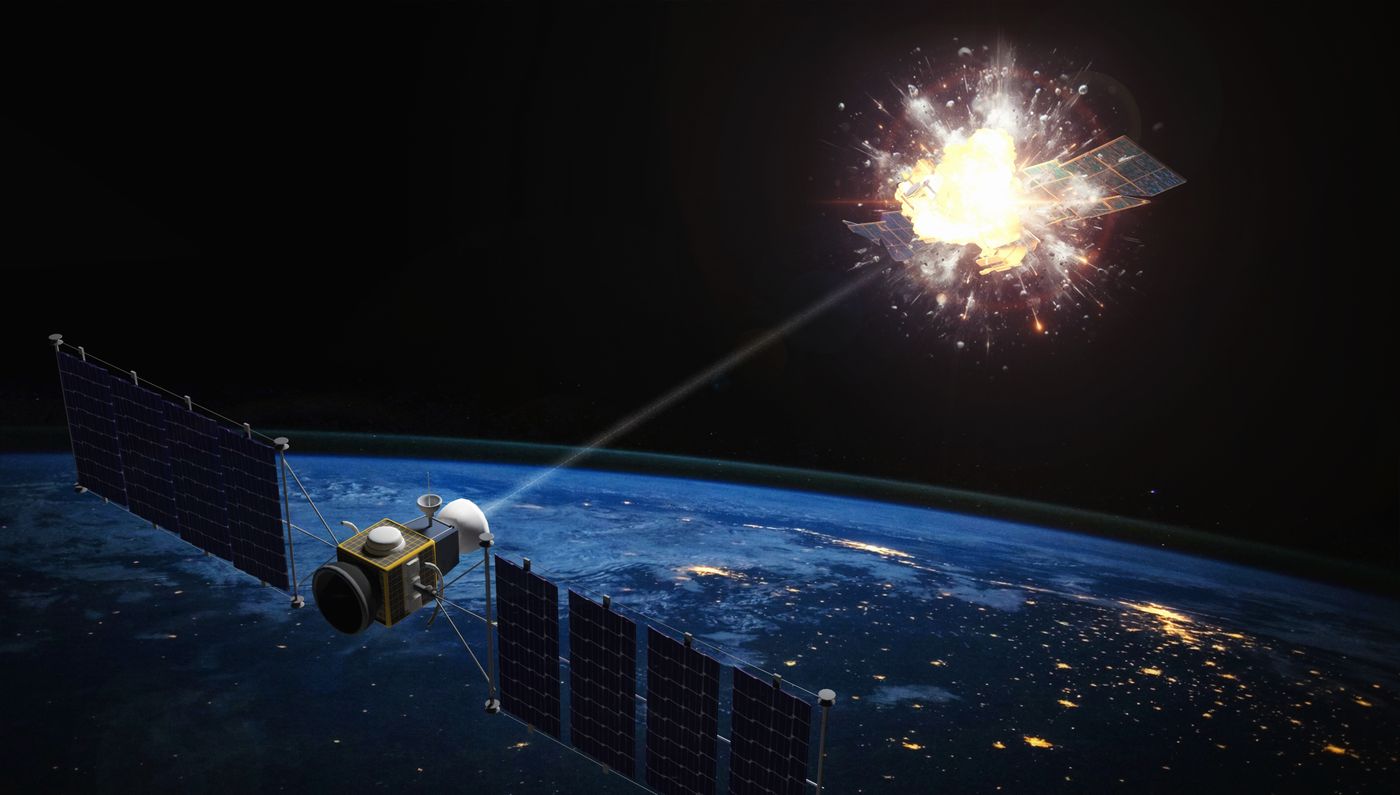
Space has been militarized since Sputnik — satellites have supported military communications, surveillance, navigation, and targeting for seventy years. What Monday's announcement represents is a qualitative shift: from space as a domain that supports warfare to space as a domain where warfare can happen directly.
A conflict in space would not stay in space. Modern militaries depend on satellites for GPS, encrypted communications, missile guidance, reconnaissance, and coordination across every domain of combat. Destroying or disabling those satellites — a capability the US now publicly has, and that China and Russia have been developing — would cascade immediately into every other dimension of modern warfare.
Victoria Samson, at the Secure World Foundation, described the disclosure directly: "In general, this is a very destabilizing statement by the United States." The concern she and other experts are raising is specific: by publicly confirming it has orbital weapons, the US has given China and Russia the justification to do the same — or to demonstrate that they already have.
The Arms Race That Was Already Happening
The disclosure doesn't create a space arms race. It publicly acknowledges one that has been ongoing for years.
Russia and China have been practicing satellite-attack maneuvers in orbit for more than a decade — maneuvering satellites close to American ones, testing jamming capabilities, and in the case of China, conducting a 2007 anti-satellite missile test that created a debris field still circling Earth. The US, for its part, has been developing counter-space capabilities through classified programs that have now, as of Monday, been partially acknowledged.
The Space Force's warfighting framework, released in April 2025, was explicit: the service's mission had shifted from primarily supporting roles to treating space as "a contested warfighting domain," with offensive and defensive counter-space operations as central missions. Senior military leaders had called for weapons and interceptors in space. Monday was the day someone finally said they were already there.
What Happens Next
Meink also referenced the Golden Dome missile defense initiative — the US layered missile defense system — and its space components. The Space-Based Interceptor, he said, went from initial contract to flight-ready hardware in under a year and could reach initial capability by 2028. SpaceX won a $4.2 billion contract in May 2026 to build satellites for space-based targeting, with the first launches expected this month.
The sequence is not subtle. The US is not only acknowledging weapons in orbit — it is describing an accelerating program to put more there.
Whether the government's disclosure produces a diplomatic response from China and Russia, a demonstration of their own capabilities, or an acceleration of their own programs, experts said, depends on decisions made in Beijing and Moscow in the coming days. What is clear is that the era in which governments could collectively maintain the fiction that space was unweaponized is, as of this week, formally over.