In 2004, terrorists seized a school in Beslan, Russia and killed 334 people — 186 of them children. In the weeks after the attack, a Russian psychic named Grigori Grabovoi approached the bereaved parents with an offer: for $1,500 per child, he would use his powers to bring their sons and daughters back from the dead.
He was convicted of fraud in 2008 and sentenced to 11 years. He was released in 2010.
Those numbers you've been seeing on TikTok — the ones people whisper for money, love, and health — are his.
The Codes Have Been Viral Three Times Now
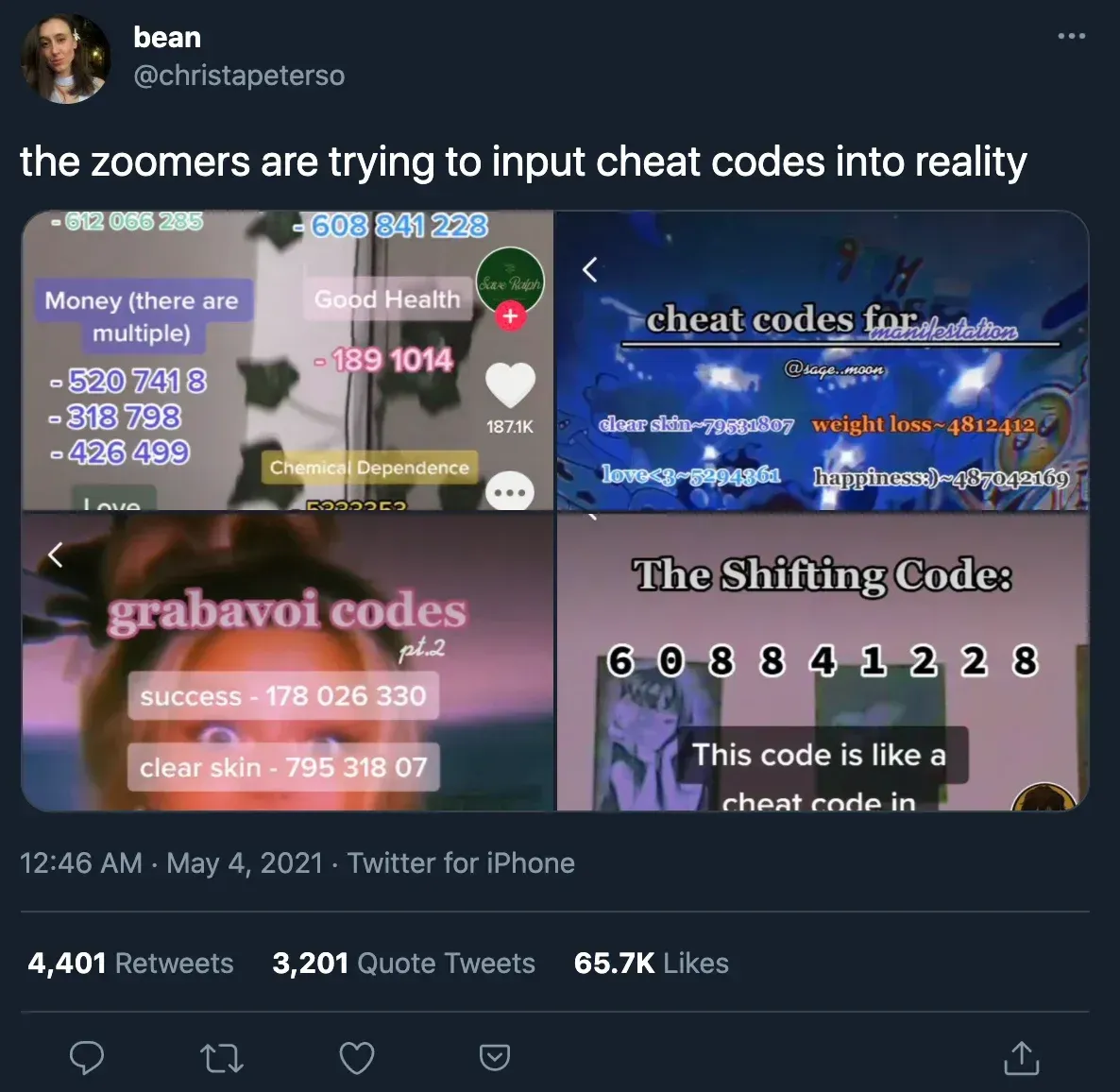
Grabovoi numbers (also called Grabovoi codes) are specific digit sequences that the creator claimed could manifest real outcomes when written, repeated, or visualized. The most popular: 520 741 8 for unexpected money. 888 412 1289018 for love. 80845700 for good health.
They went viral in 2021, again in 2023, and they're back in 2026 — each cycle bringing a fresh wave of users who encounter them as a discovery, with no backstory attached. Right now, the money code is the one spreading fastest. In the current economic climate, that's not a coincidence.
The Numbers Are Fake. The Practice Isn't.
Here's the part that actually surprises people: using these codes does something — just not what Grabovoi claimed.
His theory was that each number sequence carries a specific vibrational frequency that can interact with reality. There is no evidence for this. The numbers themselves are arbitrary. He assigned them to outcomes based on nothing verifiable, and anyone could swap them for different digits with identical results.
What does work is the practice around them. Writing a number down every morning, repeating it before bed, returning to it when you're stressed — these are forms of focused intention and repetition that psychology has studied extensively. They work the same way affirmations and visualization work: by keeping a goal at the front of your mind, shaping your attention, and making you more likely to notice and act on relevant opportunities.
The number is a container. The focus is the ingredient. Research on affirmations and mental imagery consistently shows that structured repetition practices can influence behavior and motivation — none of which requires the specific digits Grabovoi invented.
Why the Money Code Keeps Spreading
Every two years or so, the unexpected money code finds a new audience. It tends to spike during periods of economic stress, when people feel like conventional paths aren't working and low-effort rituals feel worth trying. The TikTok format — someone whispering confidently into a camera, comments full of "this worked for me" — is perfectly built to spread it.
The appeal is real even if the mechanism isn't. A ritual that costs nothing, takes 30 seconds, and keeps your financial goals present in your mind every day isn't the worst habit to build. The problem is when people treat it as a substitute for action rather than a supplement to it.
What You're Actually Doing When You Use Them

Strip away the fraud conviction and the TikTok packaging and what you have is a focusing tool — one that works for the same reasons prayer, mantra, and affirmations work. The ritual matters. The specific numbers don't carry any special power.
The full picture: the practice has merit, the numbers are arbitrary, and the man who created them charged grieving parents $1,500 each to resurrect their children after a massacre. That context doesn't make the ritual useless — but it's worth knowing before you write the digits on your wrist.