Memorial Day tends to bring the most visible costs of military service into focus — the injuries we can count, the graves we can visit, the names on walls. A story that has been quietly circulating in psychological research circles suggests that some of the deepest wounds from modern warfare are ones the military itself didn't know to look for.
A New York Times investigation drew on interviews with more than 40 artillery gun-crew veterans across 16 states who served in the campaign against ISIS between 2016 and 2017. These were service members who operated long-range weapons from a distance — they did the firing, but they never saw the enemy, never witnessed the aftermath of the shells they sent, and never suffered physical combat injuries. A striking number came home deeply unwell. Many developed nightmares, hallucinations, and panic attacks. A substantial number died by suicide or attempted it.
Military doctrine had assumed that firing from a distance was psychologically safe. A recent piece in Psychology Today by Ezenwa Olumba, Ph.D., drawing on that investigation, suggests the assumption was wrong in ways that are still being understood.
Forty Gun Crews, Sixteen States, One Hidden Pattern
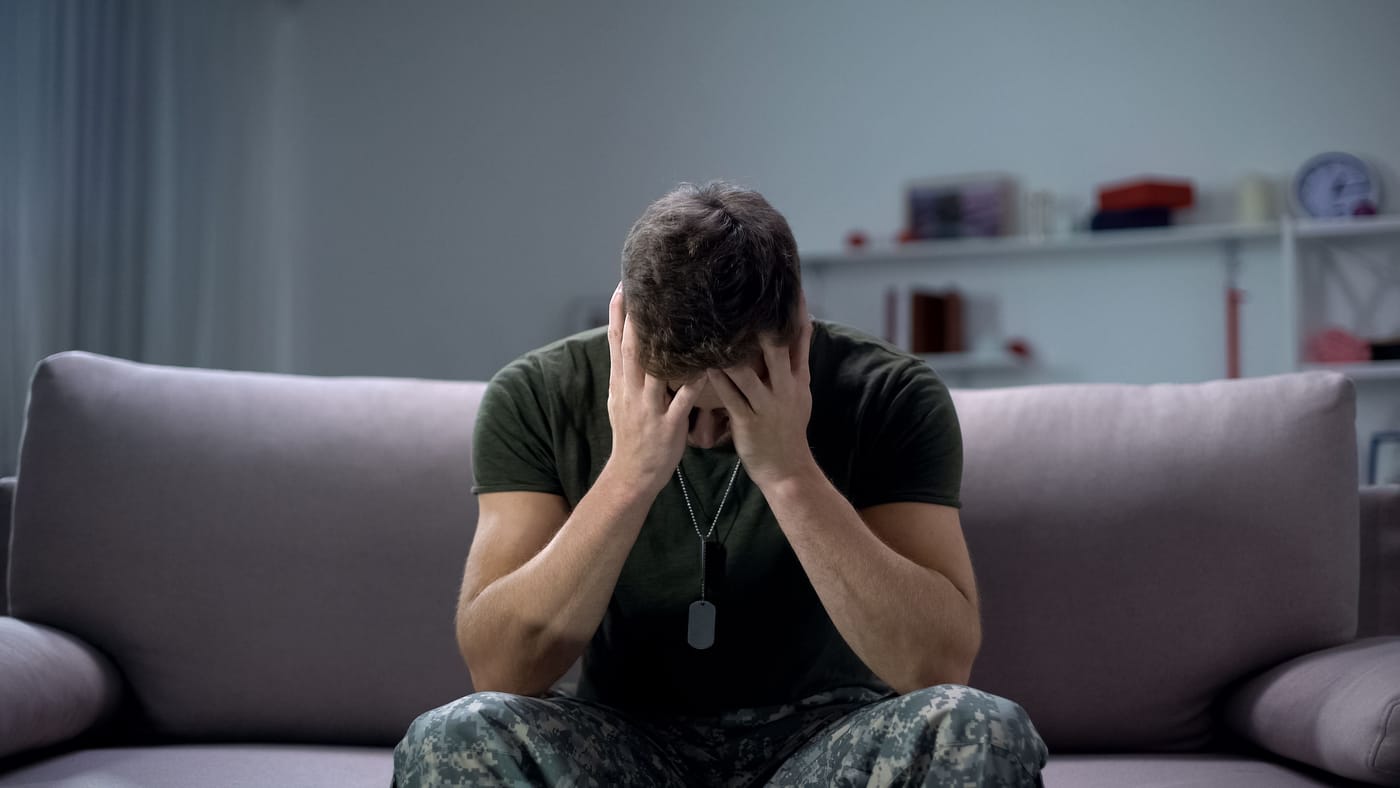
Several of the veterans were eventually diagnosed with PTSD — a designation that confused them. They hadn't been in direct combat, hadn't been shot at, hadn't watched anyone die in front of them. The diagnosis felt borrowed from a different kind of war than the one they'd fought.
What the investigation found was a different kind of pattern: the accumulated psychological weight of firing tens of thousands of high-explosive shells into populated areas, over many months, without ever knowing what happened to the people on the other side. Not ignorance — imagination.
What the Body Absorbed Before the Mind Did
The physical environment compounded things. Each artillery blast sends a shock wave strong enough to pass through a human body. Gun-crew members described the repeated force of those detonations as disorienting and gradually overwhelming — a kind of physical battering that accumulated over months of sustained fire. The combination of that sensory toll and the knowledge of what their weapons were designed to do created something that didn't fit the military's existing categories for combat injury.
What makes this psychologically significant is that the absence of sight was not the same as the absence of impact. The human mind is not a passive recorder. It actively constructs what it believes happened — filling in what it couldn't see with images assembled from context, training, and the logic of cause and effect.
Memory as Reconstruction, Not Replay
This is where the psychology becomes important for anyone trying to understand what these veterans experienced. Memory doesn't retrieve events like a video file. It reconstructs the past from fragments, shaped by emotion, fear, and meaning — including events that were believed to have occurred but were never directly witnessed. Imagined scenes, built from available information and emotional context, can acquire a force that is psychologically indistinguishable from lived experience.
For gun-crew members who fired shells into cities and towns they couldn't see, the mind may have supplied its own imagery — reconstructing what the weapons did, again and again, in the form of nightmares, intrusive thoughts, and eventually hallucinations. The war didn't follow them home as memory. It followed them home as imagination.
The Ghost in the Kitchen
One Marine, Javier Ortiz, described returning home and seeing a hallucination in his kitchen — the figure of a young girl, pale and dust-covered, as though caught in an explosion, watching him. He had never witnessed a civilian casualty firsthand. The image was something his mind had constructed from what he knew was possible.
Another Marine, Austin Powell, pounded on his neighbor's door in tears one night, convinced something was in his room. His neighbor, Lance Corporal Brady Zipoy, searched and found nothing — then quietly admitted he had been struggling too. Two young men, home from a war fought at a distance, finding each other in the middle of the night.
The Debt That's Still Coming Due
The broader implication — on Memorial Day and beyond — is that the category of combat trauma needs to expand. Veterans may need care not only for what they witnessed directly, but for what they imagined, reconstructed, and cannot stop rebuilding. A wound that forms in the imagination is no less real for having formed there.
The Pentagon's response to the investigation was described as a wall of silence — an institutional refusal to account for a cost that didn't fit the existing framework. Understanding what modern remote warfare does to the people who conduct it is part of what it means to take seriously the full price of service.