The romantic ideal of a shared vacation involves doing everything together — every meal, every excursion, every morning, every evening. The data suggests this ideal is actively making trips worse.
A survey of 2,000 Americans conducted in March 2026 by Talker Research for Club Wyndham found that 77% of respondents agreed that personal space eases tension with travel companions. The average traveler reported needing roughly two hours of alone time per day on vacation to feel their best. And — the counterintuitive part — over two-thirds said that brief time apart helped them feel more connected to whoever they were traveling with.
The 2-Hour Rule
The finding holds across relationship types. Whether traveling with a partner, a friend group, or family, the experience of a few hours doing something independently — before coming back together — consistently produced better outcomes than uninterrupted togetherness.
Travel agent Alexandre Torres described his own approach with his wife, Jewel: "It's normal in a relationship to have your own passions and things that you're interested in, and your partner may not be, so why not utilize a vacation to go do those things?" On cruises, Jewel might spend her morning at the spa while Alexandre is already at the waterslide. When they reconnect: "You guys are communicating about how your day went, what you just did. You're still learning from each other."
The space doesn't subtract from the shared experience — it gives each person something to bring back to it.
The Most Common Sources of Travel Tension

The survey asked respondents to identify what typically created conflict with travel companions. The results are specific enough to be self-recognizing for anyone who's ever been on a trip.
Figuring out what to eat topped the list at 41%. Getting ready at different speeds came second (37%). Disagreements about how to plan the day came in at one third. Sharing a small space amplified all of these: choosing what to watch on television and, notably, snoring were among the top in-room complaints.
More than half of respondents said they were likely to plan shorter trips when they knew they'd be sharing a small space with someone. The size and configuration of the accommodation turns out to matter enormously — not because people want distance, but because proximity without relief becomes pressure.
The "Vacation-Incompatible" Problem
One finding stands out. Among respondents, 48% said they would be willing to travel with someone they knew wasn't vacation-compatible with them — a friend who travels at a different pace, a partner with opposite preferences — if they had access to their own space in a larger accommodation.
The implication: what most people call a "compatibility problem" is often just a proximity problem. The person isn't actually difficult to travel with; they're difficult to be with every single hour of every single day with no separation. Those are different things, and only one of them requires finding new travel companions.
Family therapist Blanka Molnar learned this in Prague, on a trip with a friend whose extroverted energy she found exhausting. The conflict wasn't about the friend's character — it was about unspoken expectations and zero built-in recovery time. "Open communication can always help," she says. "Hey, I really need some time alone — and then I just go into a coffee shop and sit alone with my book."
How to Build It In Without It Feeling Like a Rejection
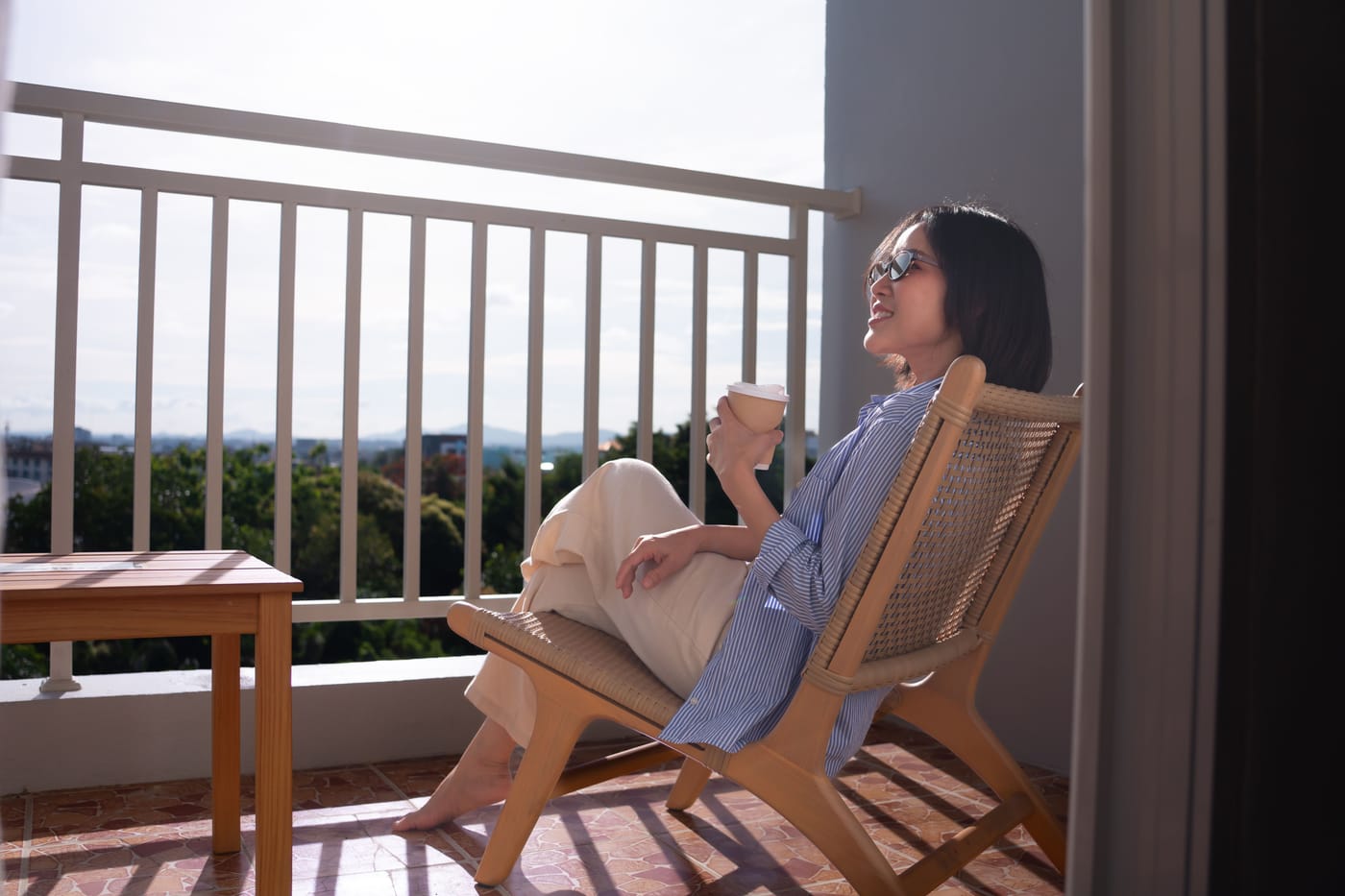
Annie Roberts of Club Wyndham summarizes the research well: "Travelers aren't looking for distance from the people they love; they just want the option for space that allows everyone to relax, reset, and show up as their best selves."
The practical version involves having the conversation before the trip rather than during it: naming your must-dos, being honest about your pace and your need for downtime, and building in at least one daily window where people go their separate ways without it meaning anything. The trip to Japan that Alexandre Torres is planning for his 30th birthday includes exactly this framework — clear communication upfront about what each person needs.
The two hours alone doesn't mean you're not enjoying each other. According to the data, it's largely why you are.