
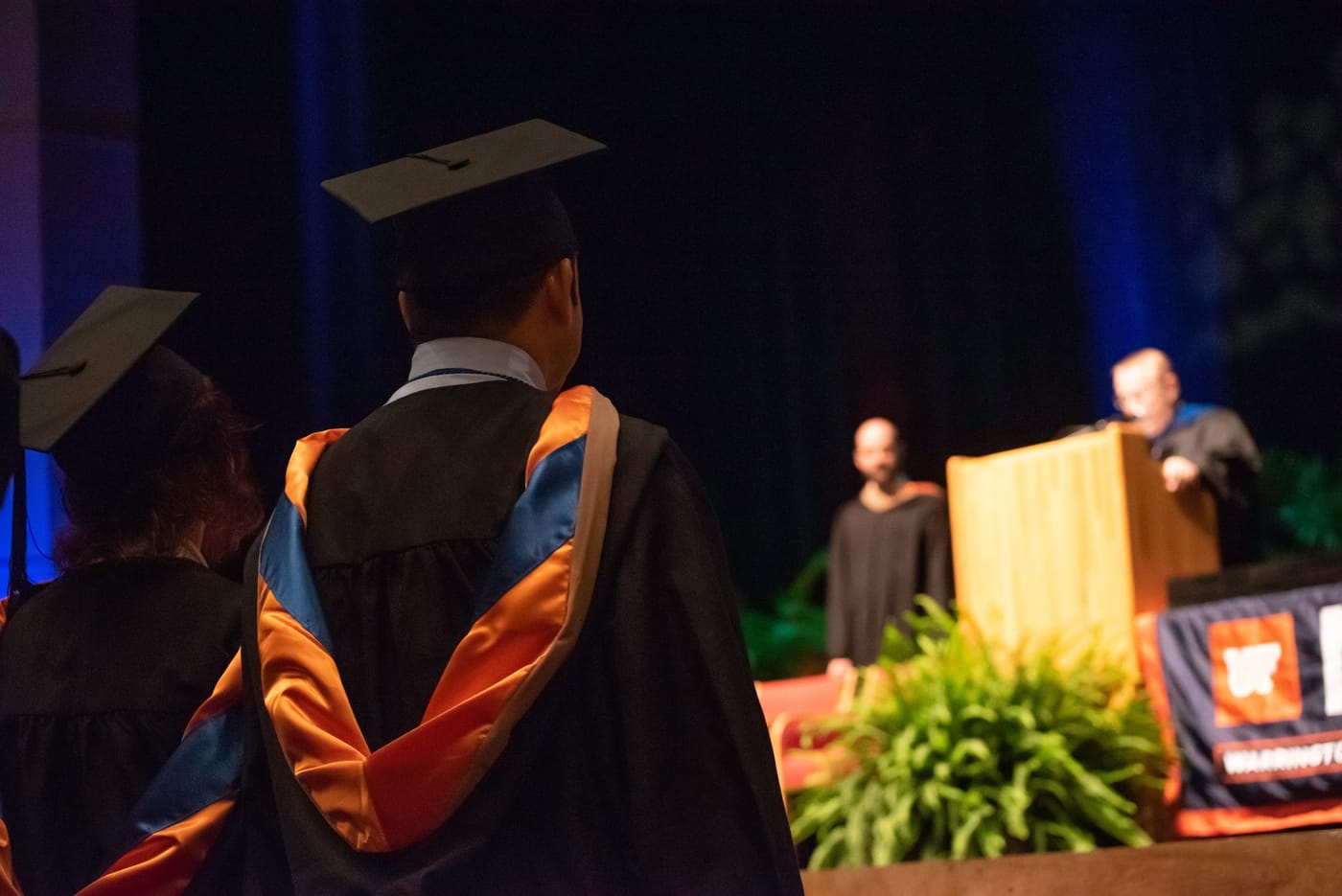
At commencement ceremonies across the country this spring, a pattern emerged. Speaker after speaker told graduating classes that artificial intelligence represented the next industrial revolution — and was booed. Not politely ignored. Booed.
The reaction surprised commentators who expected graduates to be the generation most native to new technology. A recent piece in Psychology Today by clinical psychologist Marianne Brandon, Ph.D., argues the boos weren't really about technology at all. They were about something harder to name and harder to fix.
The Boo Heard Across Commencement Season
The graduates being handed diplomas this spring started their programs before ChatGPT existed. Many chose their fields specifically because they believed the work was durable — that it required the kind of human judgment, creativity, or relational skill that couldn't easily be replicated. They took on debt. They spent years in training. They showed up to graduation and were told the landscape had fundamentally changed while they were in school.
The boo wasn't technophobia. It was the sound of people being told, at the moment they were supposed to celebrate their credentials, that those credentials had just been devalued.
Eight Years of Training, Now Worth a Master's Salary
Brandon cites a concrete and alarming example: at least one major insurance company has already moved to reimburse doctoral-level therapists at the same rate as master's-level clinicians. The reasoning is that AI-assisted therapy tools can approximate some of what the additional training provided. The practical result is that people who spent eight to ten years earning a doctorate — accruing debt, deferring income — are now being compensated as if they'd stopped three years earlier.
This is happening not in some speculative future but in active billing right now, in the mental health field, affecting people who graduated last month. The same dynamic is unfolding in law, where AI tools are displacing entry-level associate work. In medicine, where diagnostic AI is reducing the scope of work that justifies subspecialty training. In software, where junior engineers are competing directly with tools their senior colleagues deployed.
This Isn't Just an Economic Story
The economic framing — job displacement, wage pressure, credential devaluation — captures what's measurable. What it misses is what Brandon argues is the deeper injury.
Work is not only how people earn money. It is, for most people, a primary source of identity, structure, meaning, and social connection. When work is threatened — or when years of preparation for work are suddenly reframed as unnecessary — the psychological effects extend well beyond financial anxiety. The Headspace 2026 Workforce State of Mind report documents elevated stress and a measurable decline in sense of purpose across industries in the current moment. Job loss is one of the strongest predictors of depression in the research literature. What AI disruption is producing, in many cases, is something that looks like anticipatory grief — the mourning of a future that seemed secured.
What the Research Says About Work and Identity
The graduates booing AI speeches are not wrong to be alarmed — they are right, and the boos are an accurate signal that something real is happening to their sense of the future. What Brandon adds is a clinical lens: that the intensity of the reaction reflects how deeply work is woven into identity, particularly for people who spent their formative years building toward a specific professional self.
The research on this is consistent. Adults who lose work don't primarily lose income — they lose the answer to the question of who they are. AI is disrupting that question for millions of people who haven't lost their jobs yet but can see the trajectory.
The Counterintuitive Hope
Brandon ends her piece with an argument that the boo might, in the long run, point somewhere useful. Human connection — genuine, embodied, unmediated relationships — has consistently been the most robust predictor of well-being across the research literature. If AI takes over the work that can be automated, what remains is precisely the work that can't: presence, attunement, meaning-making, care.
That's a harder argument to make on a stage to someone holding a diploma they're not sure will matter. But it's not a dismissible one. The graduates booing AI speeches may be mourning something real — and that mourning might, eventually, clarify what actually can't be replaced.














