The robot sprinted the 100 meters faster than any human ever has. It crossed the finish line at 8.64 seconds — beating Usain Bolt's 2009 world record of 9.58 seconds. Then it slammed into a padded wall in a blaze of sparks, flames, and flying mechanical limbs.
This was the World Humanoid Robot Games 2026, held last week in Beijing, and it was exactly what it sounds like: an Olympic-style tournament for machines, featuring 2,000 humanoid robots from 666 teams across 16 countries competing in events from football and boxing to dance, weightlifting, and firefighting.
The viral footage is extraordinary. The context is more extraordinary still.
The Record That Nobody Prepared For
The headline number from the games is Tiangong Ultra's 100m time. To run 8.64 seconds — a full second faster than the fastest human who has ever lived — was, according to observers on the ground, genuinely startling. BBC Science Focus reported that this year's top speed was more than twice as fast as last year's winning robot. The peak standing jump rose from 0.96 meters in 2025 to 3.40 meters in 2026.
"The progress they have made from last year is staggering," said Thrishantha Nanayakkara, professor of robotics at Imperial College London. "By 2030, it will be a very different world."
What sent the robot into the wall was not a mechanical failure. It was a decision-making failure — the AI system that controlled the body could run faster than it could stop. The sprint record was real. The intelligence required to do something useful with that speed is a different, harder problem.
The Comedy Is the Point — and Not the Point
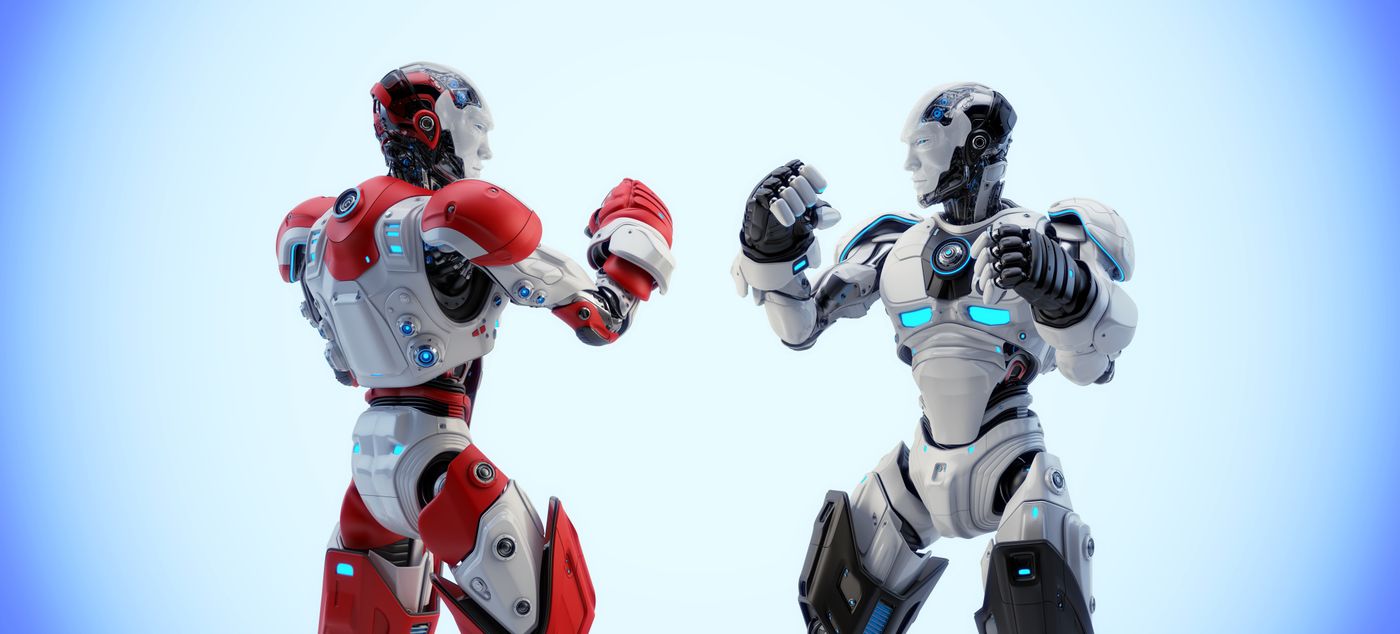
The footage that spread across social media this week was mostly pratfalls. Synchronized dance routines in which robots collapsed one after another. A football scramble in which six humanoids converged on the ball, fell over each other, and stayed down. A robot cheerleader wielding glittery pom-poms "flailing around like it was having a fit," in the words of comedian Charlie Higson, who tuned in and kept coming back. A humanoid martial artist landing a knockout roundhouse kick — then doing it again, and again, because nobody had told it to stop.
In the firefighting event, robots were given 30 minutes to identify dangerous substances, locate a fire, and find an extinguisher. Only 3 of 12 teams completed the full challenge.
The Chinese government broadcast every pratfall, every crash, every spark — and this was a choice. When you produce 90% of the world's humanoid robots and your president is about to meet the American president for a summit where tech supremacy is explicitly on the agenda, you can afford to show the failures. What you're communicating isn't the failures. It's the trajectory.
The Part That Isn't Funny
China produced 12,800 humanoid robots last year — approximately 90% of global output. The Trump administration banned imports of Chinese humanoid robots last month on cybersecurity and national security grounds. Elon Musk's Optimus humanoid went into production this month. This is the industrial context around the videos of robots falling over each other and catching fire.
Beijing's five-year plan explicitly calls for accelerating the "practical application of humanoid robots" in roles including "high-risk environments" — language that experts say includes military applications. One senior Indian police officer watching the games said: "Watching robots on borders someday, carrying guns and making decisions, will be something else entirely."
Whether the ChatGPT moment for robotics — the point where these machines become generally useful in the real world — arrives in 5 years or 15 depends on breakthroughs in AI decision-making that have not yet happened. Wang Xingxing, founder of Unitree, one of China's leading robotics companies, said publicly that a decade was a realistic estimate.

"Humanoids are not yet capable enough for mass deployment," he said. "The limitations in the AI models that power robots' decision-making and interactions remain the industry's biggest bottleneck."
The robots are getting faster. The intelligence is lagging behind the bodies. The gap is exactly what makes this week's footage funny and the direction of travel genuinely alarming.