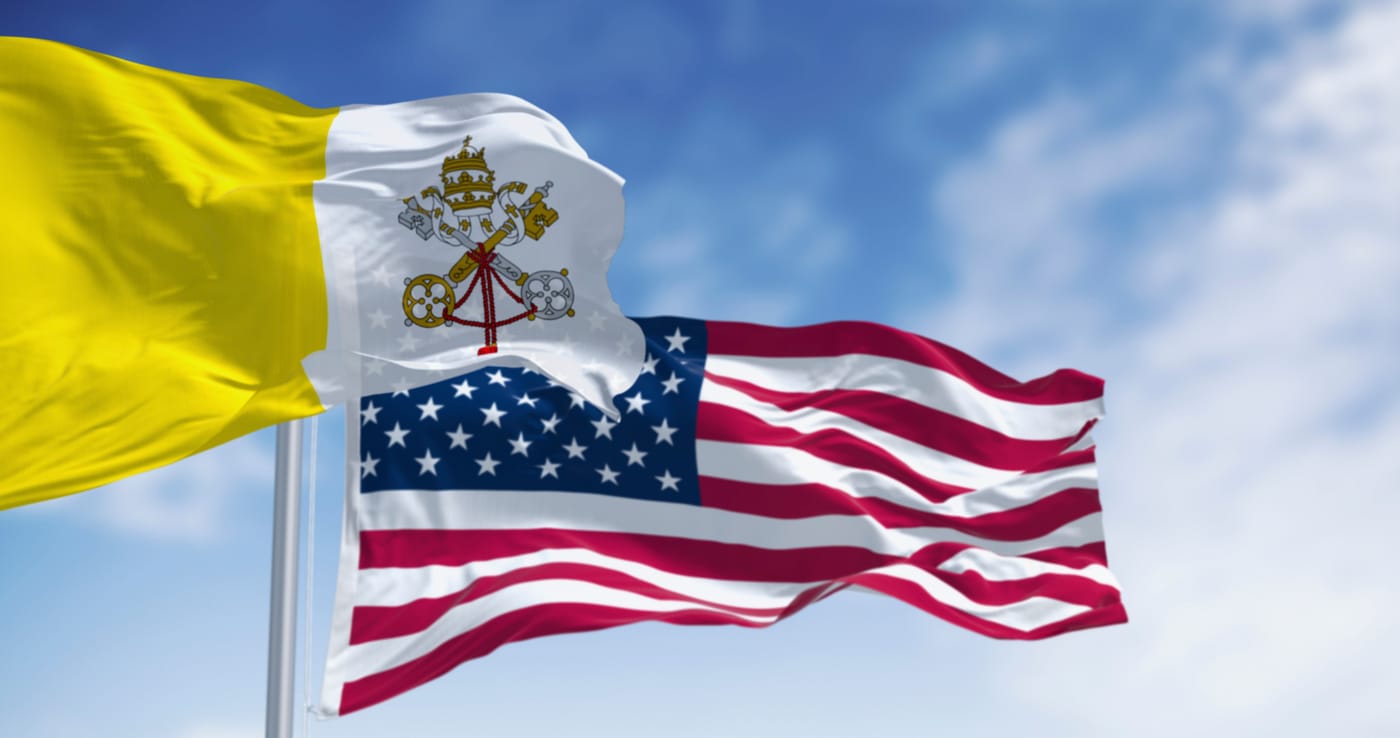
On Monday, Pope Leo XIV released his first encyclical — the formal letter that a pope writes to address the world on a matter of pressing concern. For Leo, the first American pontiff in history, that matter was artificial intelligence.
The document, titled Magnifica Humanitas (Magnificent Humanity, is a sweeping argument about AI's trajectory — who controls it, how it's being used in warfare, and what it means for human dignity. It was not written by someone unfamiliar with the technology. Leo is a math graduate who has made clear he is no technophobe. The document reflects that.
A 135-Year Callback
The encyclical was deliberately timed to land on the 135th anniversary of a document written by Leo XIV's predecessor and namesake, Pope Leo XIII, in 1891. That earlier text — Rerum Novarum — addressed the moral dimensions of industrialization and workers' rights at a moment when factories were reshaping the world and governments hadn't yet caught up. It helped shape labor law and social policy across the Western world for generations.
Leo XIV is making an explicit argument that AI represents a comparable inflection point — a technological shift so consequential that the moral framework for navigating it needs to be built now, before the power dynamics harden. The parallel is deliberate. The church showed up to the industrial revolution late; it's attempting to show up to this one on time.
Not Anti-Technology — Anti-Concentration
The document takes care to distinguish between opposing AI and opposing its current trajectory. "Technology should not be considered, in itself, as a force antagonistic to humanity," Leo writes. What concerns him is something more specific: who controls it, and whether that control is subject to any external check.
"A more moral AI is not enough if that morality is determined by a few," he writes in one of the document's sharpest lines. AI "should not be concentrated in the hands of only a few people" — a pointed reference to the small number of private companies and governments that currently set the terms for how these systems are built and deployed.
The argument isn't that AI will become conscious or steal jobs. It's that a technology capable of shaping economies, conflicts, and information flows is being developed inside a set of private incentives, largely unchecked by democratic institutions — and that this is a problem regardless of how ethical the developers claim to be.
The Warfare Angle
Leo reserves his sharpest language for AI in military contexts. He laments "the growing ease with which autonomous weapons systems can be deployed," which he argues makes war more "feasible" and progressively less subject to human judgment. The use of AI in warfare, he writes, "must be subject to the most rigorous ethical constraints."
His broader concern is what he calls a "culture of power" in which peace is no longer treated as a responsibility but as a fragile pause between conflicts — normalized and accelerated in part by technologies that make violence easier to initiate and harder to attribute.
What "Disarming" AI Actually Means
The word Leo uses is "disarm," which he's careful to clarify does not mean rejection. "Calling for prudence, rigorous evaluation and even, at times, a slower pace in adopting AI does not mean opposing progress," he writes. "Instead, it is an exercise of responsible care for the human family."
The framing is worth sitting with. Most conversations about AI governance focus on regulation — guardrails applied from outside. Leo's word choice implies something different: removing the weapon-like qualities from the technology itself, rather than just building fences around it. Whether governments or institutions are positioned to act on that distinction is an open question. But it's a more precise formulation than most of the policy conversation has managed.
Why the Church Keeps Showing Up to These Moments
Christopher Olah, a researcher who studies how AI systems work internally, attended the encyclical's presentation at the Vatican. He observed that AI labs — including those doing the most consequential work — operate inside incentive structures that can conflict with doing what's right. What's needed, he said, are people outside those incentives who are "willing to say hard things" and "push events in a better direction."
Leo XIV's encyclical is exactly that kind of intervention. Whether you're Catholic or not, a formal document from an institution with a billion followers calling for a reckoning with the concentration of AI power is not a minor event. The church was late to industrialization. It is trying, with this document, not to be late again.