
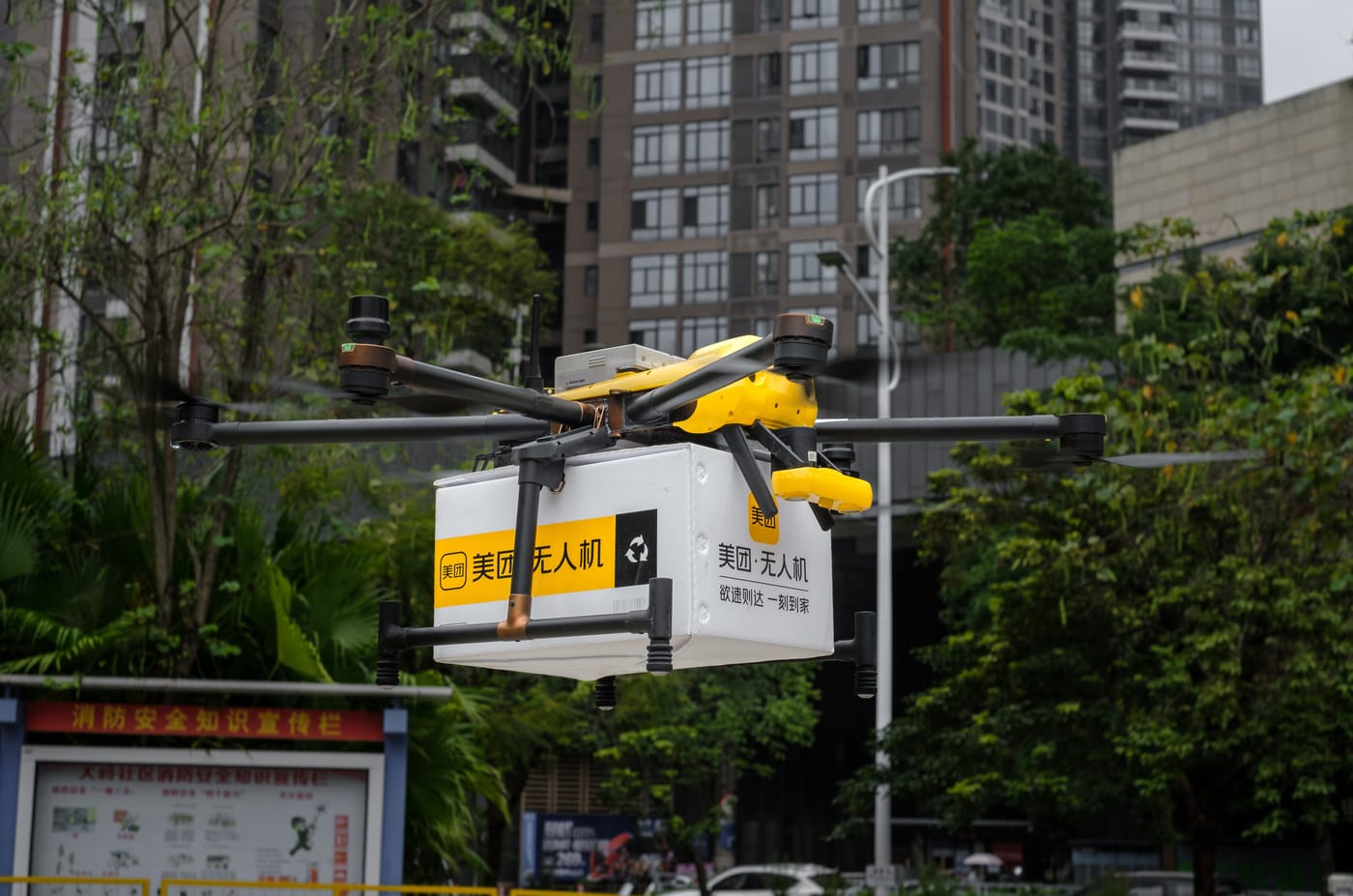
On May 11, residents near Sun Valley Commons in Indian Trail, North Carolina became among the first Americans to order food from a major fast food chain and watch it descend from the sky. Not pizza, though. The pizzas are still being worked on.
Papa Johns launched its drone delivery pilot with Wing — the Alphabet-owned drone company that earned the FAA's first-ever commercial drone delivery certificate back in 2019 — this week in Charlotte. The initial menu is sandwiches: Philly Cheesesteak, Chicken Bacon Ranch, Steak and Mushroom. The irony that a pizza company is piloting drone delivery without pizza isn't lost on anyone involved.
"Pizza comes in a very different box, with a big, flat surface area," Wing CEO Adam Woodworth told Wired. "You don't want a pizza tilted." Solving the physics of delivering a flat, heavy, topping-covered disc through the air without ruining it is, it turns out, a genuine engineering problem — one that Wing and Papa Johns are actively working on but haven't solved yet.
Why Fast Food Is Suddenly Obsessed With Drones
The economics of food delivery are brutal. The "last mile" — getting an order from the restaurant to the door — is the most expensive part of the operation, and it's almost entirely dependent on human labor. Drivers call out sick. They ask for raises. They expect tips. They get stuck in traffic. A drone does none of these things, and it can theoretically complete a delivery in minutes rather than the 30–45 that a car-based delivery typically requires.
Wing's drone network currently operates in four metro areas — Atlanta, Charlotte, Dallas-Fort Worth, and Houston — and the Papa Johns partnership is Wing's first direct collaboration with a national restaurant brand. The integration goes beyond just logistics: the two companies are working to connect Wing's drone network directly with Papa Johns' first-party app and its AI ordering assistant, Lou AI, which runs on Google Cloud. Order a sandwich on your phone, and the whole chain — from kitchen to drone to doorstep — runs without a human driver in sight.
The economic rationale, from the restaurant's perspective, is straightforward. Papa Johns CTO Kevin Vasconi put it plainly: "We have an internal business case that pencils out."
The US Is Playing Catch-Up
What feels futuristic in Charlotte is routine in Shenzhen. China has been operating large-scale urban drone delivery networks for years, with companies like Meituan logging millions of completed deliveries in dense city environments. The US has been slower — not for lack of investment, but because the FAA's regulatory framework for commercial drone operations is genuinely complex. American airspace is shared between commercial aviation, private pilots, military operations, and increasingly, delivery drones. Getting the certification to operate in that environment takes years.
Wing's 2019 certificate was historic; it took the company until 2026 to land its first major national restaurant partnership. Amazon, Walmart, and several others have been running smaller pilots for years, and the industry has collectively spent billions on the technology. The infrastructure investment makes sense when you consider the scale of what they're trying to replace — the US food delivery market alone is worth over $350 billion annually, with last-mile costs accounting for roughly 53% of total shipping expenses.
The Pizza Problem Is a Real Engineering Challenge
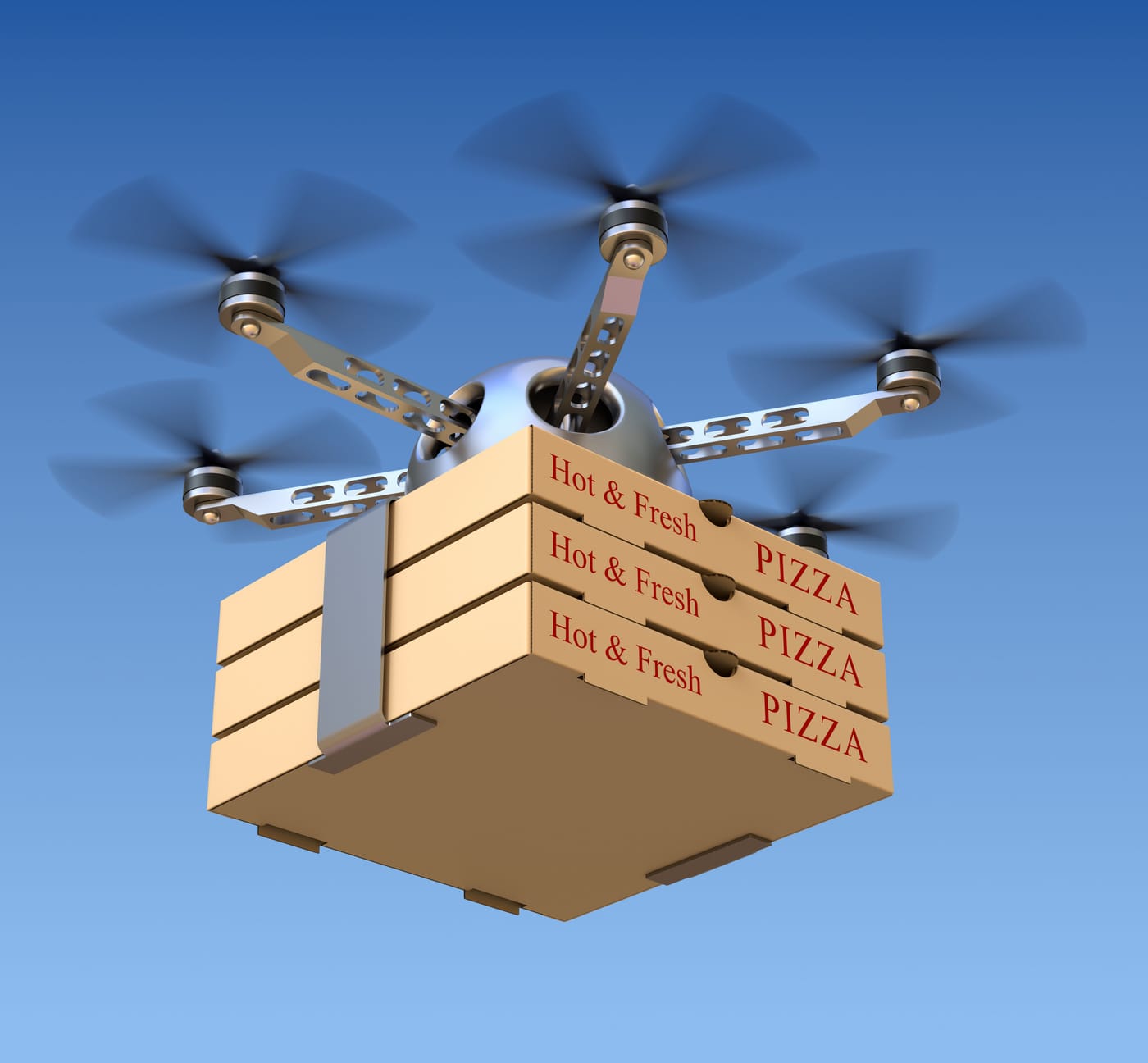
The sandwich choice isn't just a conservative first step — it's a structural decision. A toasted sandwich is compact, contained, and relatively tolerant of mild movement. Pizza, by comparison, is an engineering nightmare: a wide, flat box that creates significant aerodynamic drag, contents that shift with any tilt, and a temperature profile that degrades faster when exposed to wind and altitude changes.
"You don't want a pizza tilted" is understating the problem. A 14-inch pizza in flight is fighting gravity, wind resistance, and the structural limitations of a cardboard box that was never designed to be suspended from a cable under a propeller. Wing and Papa Johns have announced they're working on new packaging and aerodynamic load design specifically for pizza in flight. It's a genuine R&D challenge — which is partly why the pizza chains that have cracked it, like Domino's in Australia, treated the achievement as a significant milestone.
What's Actually Coming
Papa Johns plans to expand the service and integrate Wing's network directly into its own app. Wing's model lowers orders via cable — no landing pad required. Whether this scales depends on FAA authorization expansion and Wing's ability to grow metro coverage.
The bets are large. But somewhere in Indian Trail, North Carolina, a Philly Cheesesteak is already descending from the sky — and the pizza, eventually, will follow.














