

A California mother received a phone call last month from what sounded exactly like her daughter — crying, distressed, saying she needed money immediately. The mother sent it. Her daughter was at work, completely unaware any of this was happening.
She's one of thousands of people targeted last year by AI voice cloning scams, a fast-growing category of fraud in which criminals use artificial intelligence to generate a convincing replica of someone's voice and use it to extort money from the people who love them. According to the FBI, Americans lost more than $893 million to AI-related scams in 2025, including voice cloning attacks, AI-generated phishing emails, and romance scams.
A California Mom. A Philadelphia Lawyer. The Same Trap.
These scams are not targeting people who are careless or unsophisticated. Gary Schildhorn, a Philadelphia attorney, received a call in what he was convinced was his son's voice. His son, the voice told him, had been in a car accident and landed in jail. "There was no time to think," Schildhorn told CNN. "It was all, 'I have to react to help my son. He's in trouble.'" He nearly wired $9,000 before a FaceTime call from his actual son — who was nowhere near a jail — stopped him.
The scam works because it bypasses rational evaluation entirely. The sound of a loved one's voice in distress is one of the most powerful emotional triggers a human being can experience. Scammers know this. They are deliberately engineering moments that make thinking slowly feel like a betrayal.
How Little Audio This Actually Requires

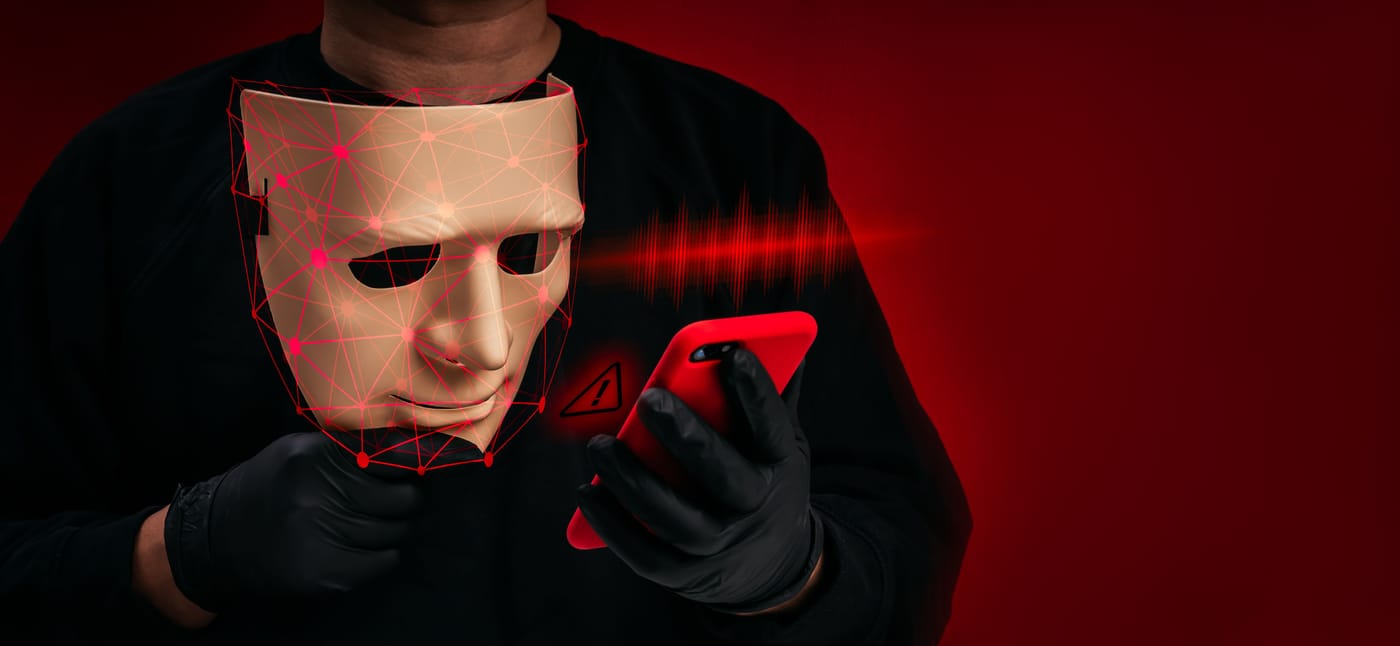
The technical barrier to voice cloning has collapsed. AI tools can now generate a convincing replica of someone's voice from just a few seconds of real audio. In practice, that means a short video posted to social media, a voicemail, a clip from a podcast or YouTube video — any of it is enough. Scammers can mimic family members, friends, coworkers, or professionals whose voices are available anywhere online.
In some cases, the voice on the call isn't even a recording. More sophisticated operations use live AI voice generation, allowing a scammer to hold a dynamic conversation in someone else's voice in real time, responding to what the victim says as the call unfolds.
Major banks including the UK's Starling and Australia's Commonwealth Bank have already issued formal warnings to customers about this exact type of fraud. The FTC's 2024 rule banning undisclosed AI impersonation exists on paper. Enforcement has been minimal.
Why Your Brain Can't Protect You Here
The reason these scams succeed — even with intelligent, cautious people — is not gullibility. It's neurology. When you hear a familiar voice in apparent distress, the brain's threat-response system activates before the reasoning centers have a chance to weigh in. The urgency is manufactured specifically to exploit that gap. "There's no time to think" isn't a personal failure. It's the intended effect.
Experts who study this say most people genuinely cannot reliably distinguish a cloned voice from the real thing — even when they're trying. The technology has crossed the perceptual threshold where human judgment is no longer a reliable defense.
The One Defense That Actually Works
The single most effective protection is establishing a family code word before you ever need it — a specific word or short phrase that only a small group of people know and that isn't findable anywhere online. If you receive an urgent call from someone claiming to be a family member in distress, you ask for the code word. If they can't give it, you hang up and call back on a number you already have saved.
The code word works because AI voice cloning can replicate how someone sounds. It cannot replicate information the scammer doesn't have.
Harry Ajder, an AI and synthetic media researcher who studies this field, put the calculus plainly: "It is much better to have your mum or your brother laugh at you for thinking they're a robot than it is to potentially be running to an ATM."
Set the code word before the call comes. At that point, it's too late to think of one.














