
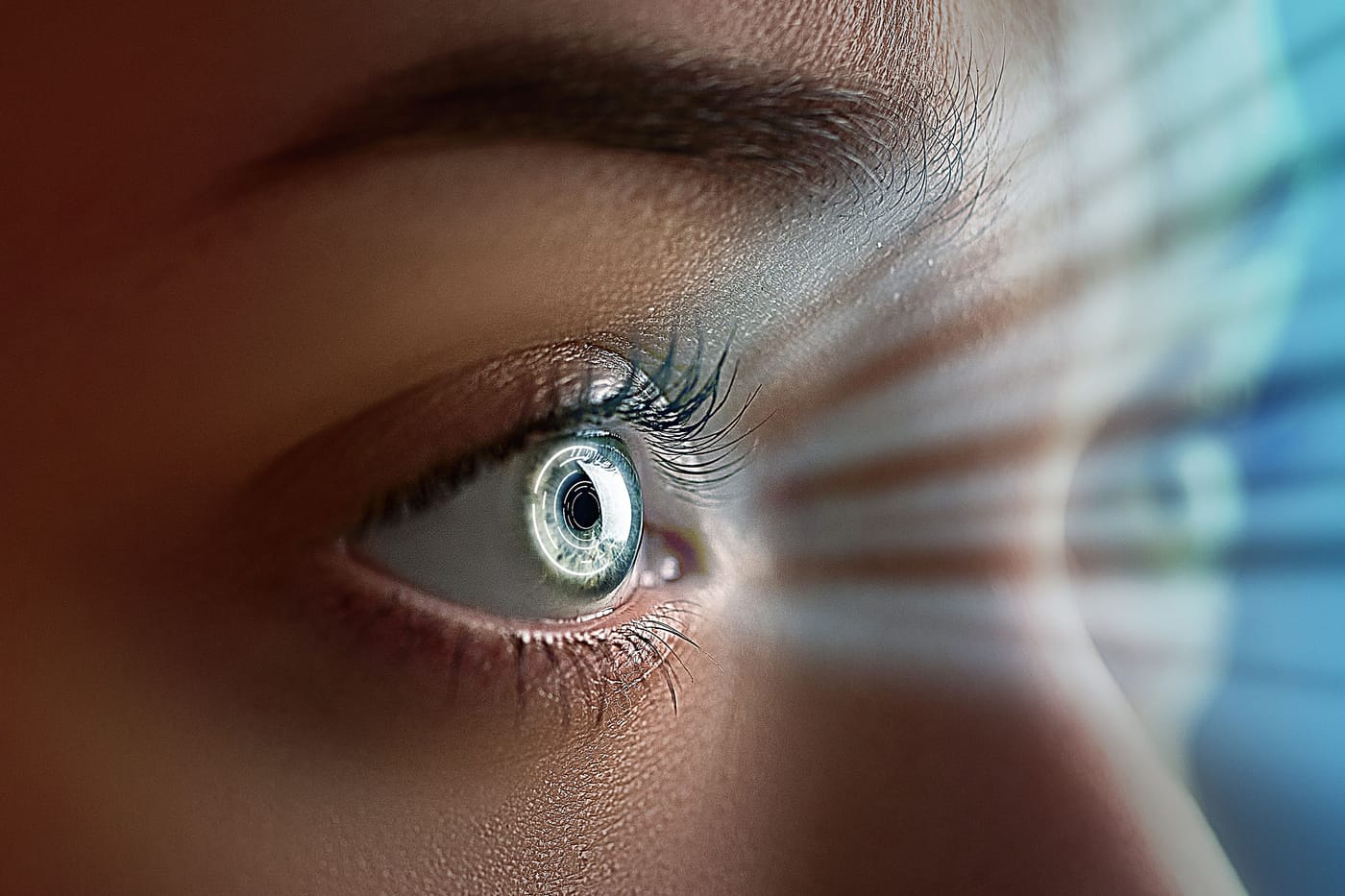
Smart glasses have had their cultural moment — Meta's Ray-Ban collaboration, the AR headsets, the slow normalization of wearing a computer on your face. A Dubai-based startup called Xpanceo thinks glasses were always the transitional form, not the destination.
In March, the company arrived at Mobile World Congress 2026 in Barcelona with five working smart contact lens prototypes, each solving a different piece of what they call invisible computing. Not concept renders. Not demo videos. Functional hardware on a show floor — prototypes built by a team of roughly 80 researchers, about half of them holding PhDs, working out of Dubai since 2021.
What Smart Glasses Were Never Going to Solve
The fundamental problem with smart glasses — the one Meta, Google, and Apple are all quietly working around — is that they're still glasses. They add weight, they change how you look, and they fail in direct sunlight because ambient brightness kills display contrast. The technology gets better every year and the form factor stays awkward.
A contact lens sidesteps all of this. Because the display sits directly against the eye, the coupling efficiency from screen to retina is nearly 100%, which means it performs just as well on a bright afternoon as in a dim room. The display moves with your eyeballs, so AR visuals stay anchored wherever your focus lands. And there's nothing on your face to explain to anyone.
Xpanceo's Interactive Smart Contact Lens for AR Vision pairs a microdisplay inside the lens itself with an external sensor suite for spatial tagging, delivering context-aware overlays that respond to where you're looking. A separate holographic version pairs with a helmet companion device — built partly for environments where glasses aren't just inconvenient but genuinely hazardous, including a space agency partnership the company is already exploring.
Your Tear Fluid as a Health Monitor
The most immediately significant prototype at MWC wasn't the AR one. Xpanceo's Smart Contact Lens for Health Readings uses a miniature electrochemical sensor to detect glucose levels in tear fluid and transmit that data wirelessly to a smartphone in real time. For the roughly 38 million Americans living with diabetes, that would replace finger-prick tests or adhesive monitor patches with something you'd already be wearing.
The health monitoring ambitions extend further — early detection of glaucoma, intraocular pressure tracking, treatment dosing adjusted in real time to your body's own signals. In this version, the lens becomes less a display device than a diagnostic one: something watching your biology continuously and quietly reporting back, without a patch on your arm or a device in your pocket.
The Smallest Battery That's Ever Mattered
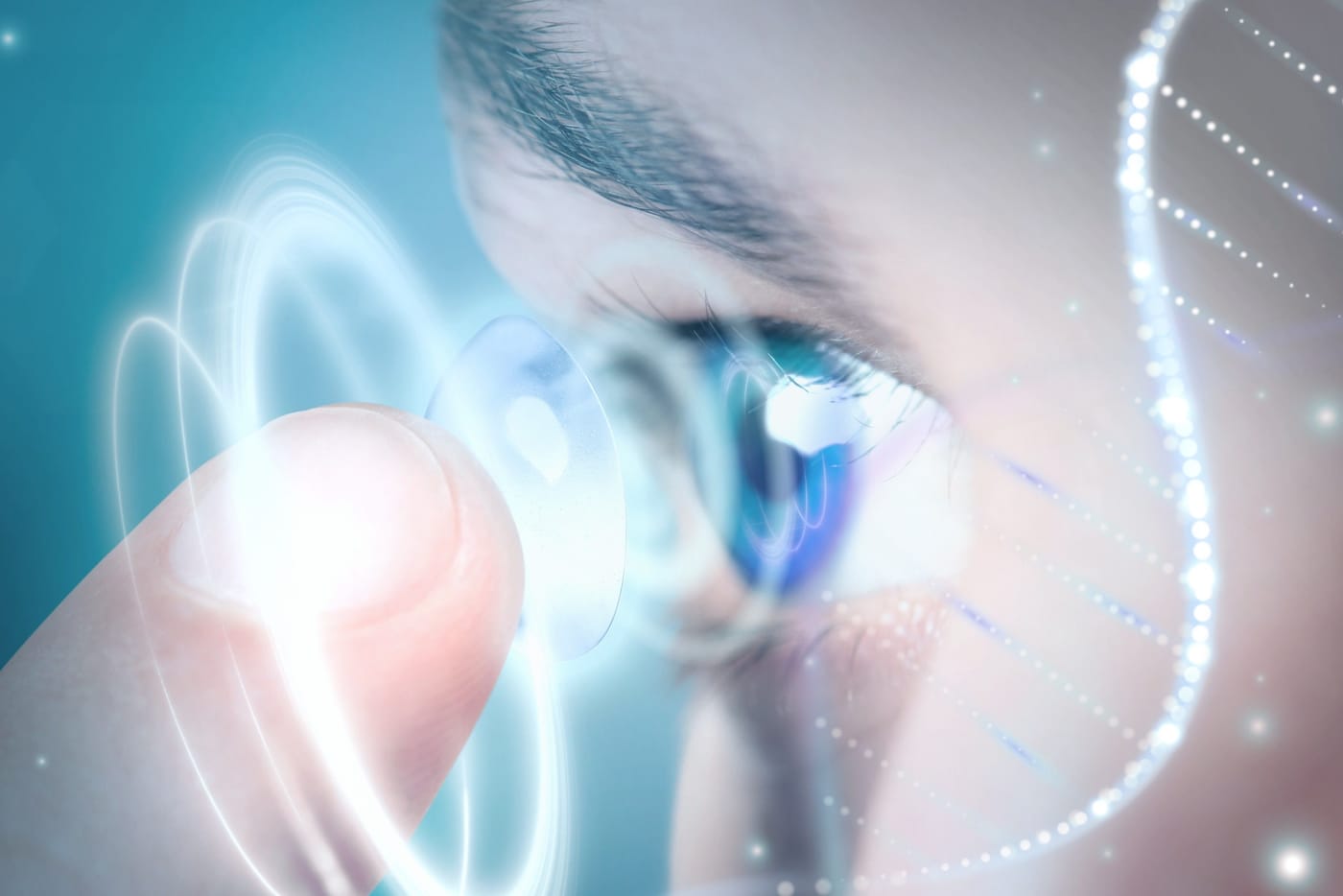
Any device small enough to sit on an eyeball faces the obvious question: where does the power come from? Xpanceo's current answer is an electromagnetic harvesting antenna embedded in the lens — small enough not to obstruct the pupil, capable of capturing and storing energy wirelessly from a companion device. They've also demonstrated a lens running on an integrated microbattery, the smallest off-the-shelf option currently available, proving the form factor can manage its own power independently.
The longer-term goals — body heat harvesting, solar-powered lenses that need no companion device at all — are still years out. For now, the companion device handles most of the computational load, which also keeps the lens from generating heat against the eye. A practical tradeoff, and one they're clearly working to eliminate.
2027 on the Calendar, Regulatory Path Ahead
Xpanceo raised a $250 million Series A in 2025 at a $1.35 billion valuation — the largest hardware funding round globally in AR/VR and wearables, and among the top three in hardware history. A consumer-ready prototype is targeted for 2027, with human trials to follow. The regulatory path for a medical-grade biosensing device adds complexity that smart glasses have never had to navigate — FDA approval for something that sits on your cornea and reads your bloodstream is a different category of scrutiny than a pair of frames with a camera.
About 45 million Americans currently wear contact lenses. Xpanceo's founders argue that only a fraction need to convert for the technology to reach what they're calling its "iPhone moment." That comparison carries some weight — and a lot of optimism. But five working prototypes at the world's largest mobile tech conference is not a slide deck. The gap between a lab prototype and something you'd actually put in your eye is still real. It just got measurably smaller.














