
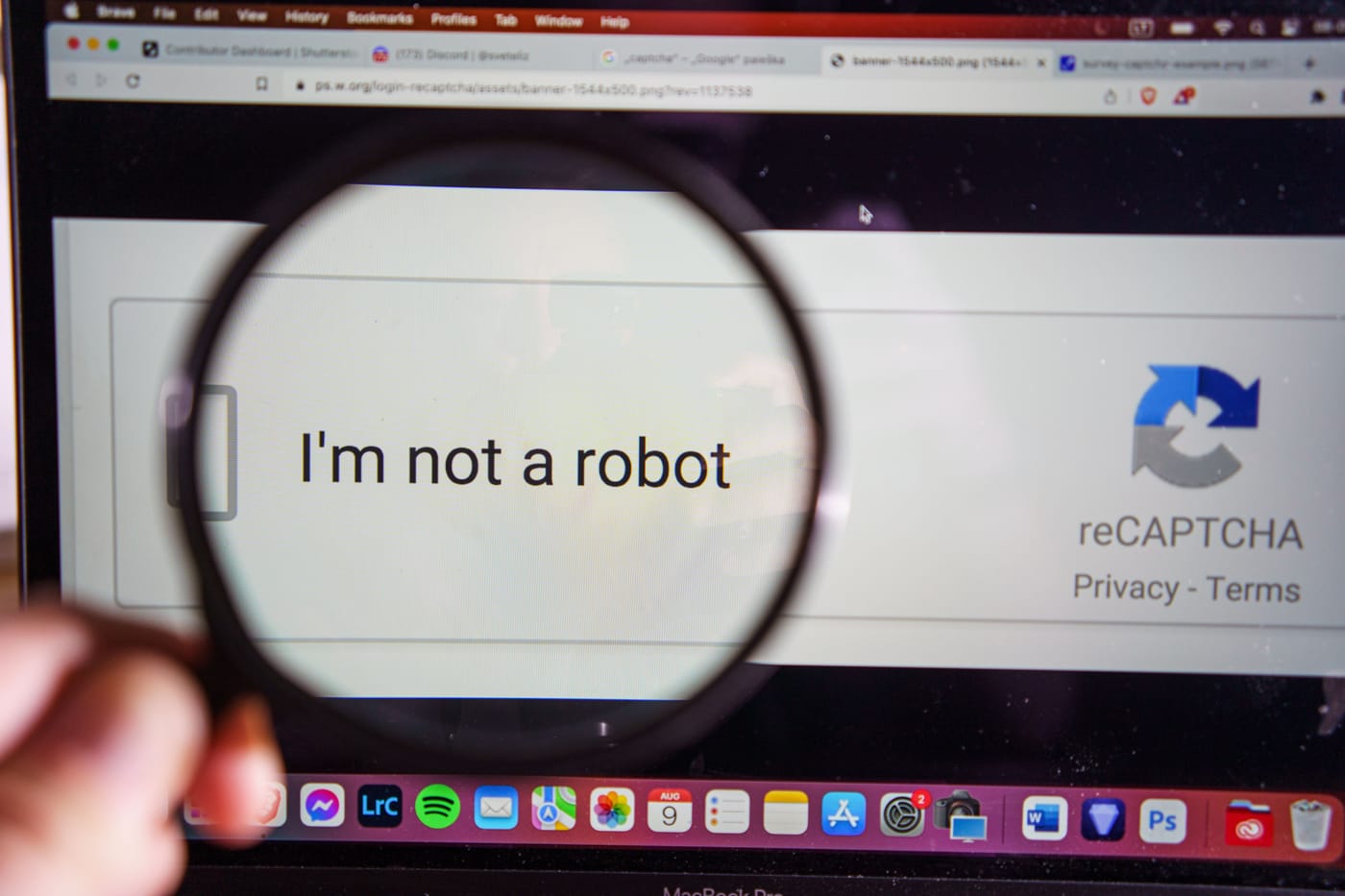
You've probably taken a version of the Turing Test without knowing it. Every time a website asks you to identify fire hydrants in a grid, or type distorted letters from a blurry image, you're completing a CAPTCHA — a Completely Automated Public Turing Test to Tell Computers and Humans Apart. The test was invented specifically because there needed to be something AI couldn't fake.
That line just moved. A landmark study published in PNAS — the Proceedings of the National Academy of Sciences — has confirmed that large language models can now pass the original Turing Test, making AI effectively indistinguishable from humans in short conversations.
What the Turing Test Actually Is
British mathematician Alan Turing proposed the "Imitation Game" in 1950 as a method for evaluating whether a machine could think — or at least behave indistinguishably from something that thinks. The test is straightforward: a human interrogator holds text conversations with both a human and an AI and tries to determine which is which. If the machine fools the interrogator consistently, it passes.
The test has been running, in various forms, for 76 years. It has been a foundational benchmark in AI research, a cultural touchstone in science fiction, and — until recently — a bar that no AI had definitively cleared.
GPT-4.5: 73% Win Rate
Researchers at UC San Diego recruited 284 participants and ran 1,023 rounds of the Imitation Game, testing four AI systems: OpenAI's GPT-4.5 and GPT-4o, Meta's LLaMA-3.1-405B, and ELIZA, the original rule-based chatbot from the 1960s.
The results are stark. GPT-4.5 was selected as the human by interrogators 73% of the time. LLaMA passed 56% of the time. Random chance would be 50%. Both models cleared the threshold — meaning that in a real conversation, most people would not correctly identify them as AI.
The result for GPT-4o is equally interesting, if counterintuitive: despite being a more recent model, it passed only 21% of the time — actually worse than ELIZA's 23%. The researchers suggest that GPT-4o's responses may be too polished, too careful, too clearly "AI-sounding" in ways that humans have learned to recognize. GPT-4.5's higher pass rate may partly reflect a more naturalistic, casually imperfect communication style.
"Counterfeit People" — The Real Concern
Passing the Turing Test is a milestone, but the researchers are careful about what it does and doesn't prove. The test measures conversational imitation in short exchanges, not intelligence — and they acknowledge that question remains open.
What they are direct about is the practical consequence. "The fact that models perform so well poses new challenges in understanding what the Turing test measures," they write — but more pressingly, it raises urgent questions about what humans can trust.
The paper uses the phrase "counterfeit people" to describe what AI systems that pass the Turing Test make possible: entities that can engage in sustained text conversation while appearing fully human, at scale, across every platform where human interaction happens. Fraud, manipulation, synthetic relationships, synthetic social proof — the infrastructure of online human interaction now has a credibility problem it didn't have before.
What Comes Next

The researchers end on a note that's unsettling and oddly hopeful at once. "While a machine has now passed the Turing test for the first time, this is not the last time humans will have a chance to succeed at it."
What they mean is that the test itself needs to evolve — and that humans retain the ability to create new, harder tests. The CAPTCHA worked until it didn't. New benchmarks for human-AI distinction are already being developed. The arms race between detection and imitation has a new starting point.
What it means in practice, right now, is simpler: the assumption that you're talking to a human online is no longer a safe default. It probably hasn't been for a while. The PNAS study just put a number on how far the gap has closed.














