

The most comprehensive study ever conducted on AI-powered hiring algorithms has found that the tools screening millions of job applications at Fortune 100 companies are producing racially biased outcomes — and that the companies using these tools had been measuring bias in a way that made the disparities invisible.
The paper, "Algorithmic Monocultures in Hiring," was authored by researchers at Stanford, Chapman University, and Northeastern University. It analyzed more than 4 million job applications submitted by 3 million applicants across 156 major employers, all screened by the same vendor: a talent platform called Pymetrics, now owned by Harver.
"We find clear racial disparities in applicant outcomes," the authors write.
What Pymetrics Is and Who Uses It
Pymetrics does not screen résumés. It screens people through a battery of online games designed to measure cognitive traits — risk tolerance, processing speed, altruism — and produces a score that determines whether an applicant advances in the hiring process. The company has long marketed this approach as more objective than traditional résumé screening, and in its own prior analysis found no disparities that rose to the level of legal scrutiny.
The new research challenges that conclusion not by disputing Pymetrics' math but by arguing the company was answering the wrong question.
The Bias They Were Measuring Wrong
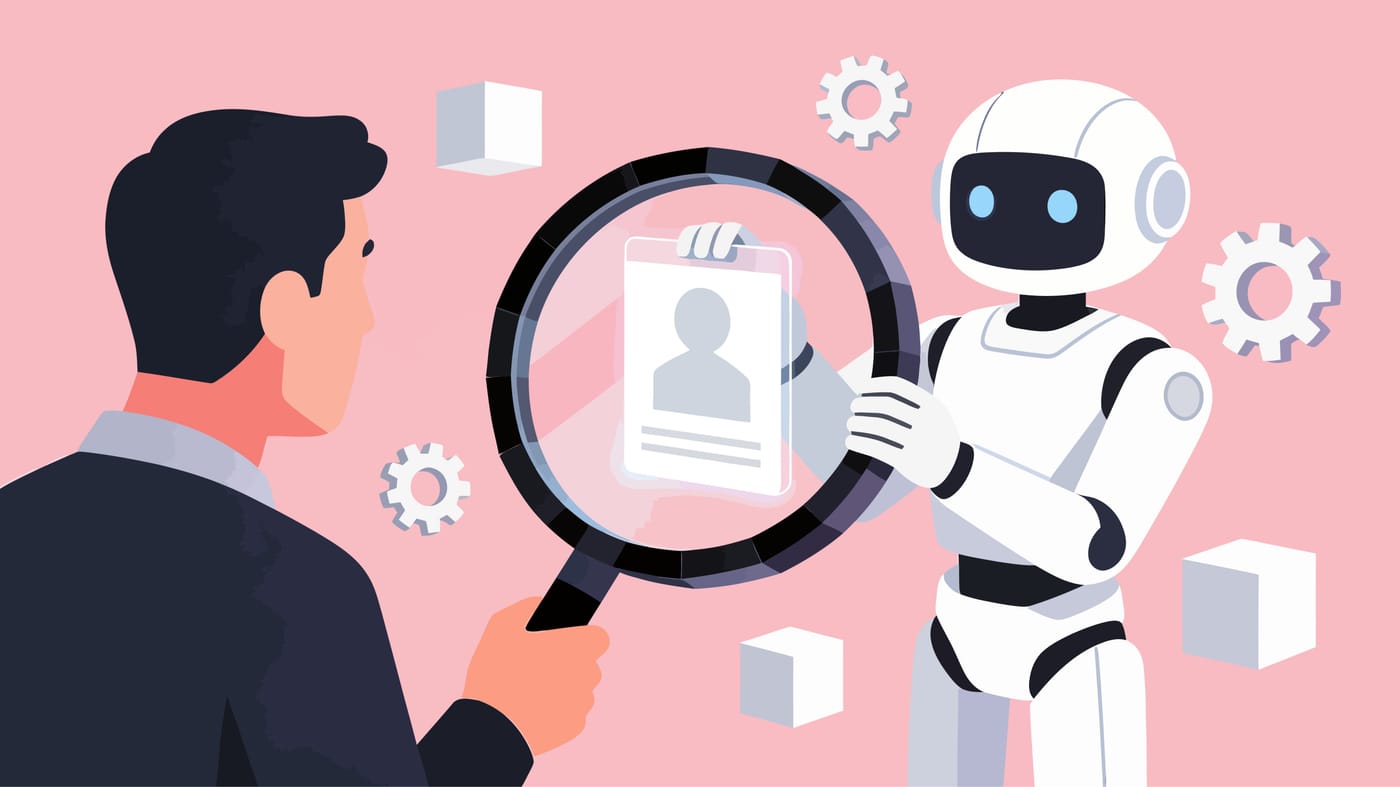
Pymetrics had measured bias by pooling all applicants and outcomes across all employers and positions simultaneously. The Stanford-led team instead analyzed each of the 1,746 individual job positions separately — which is how U.S. employment discrimination law, specifically the EEOC's "four-fifths rule," is actually designed to be applied.
When analyzed position by position, 10.62% of jobs in the dataset showed adverse impact on Black applicants — meaning the algorithm recommended Black candidates at a rate below the federal threshold relative to the most-selected racial group. Thirty percent of Black applicants applied to at least one such position. And 25.87% of all applications submitted by Black applicants — nearly 40,000 submissions — were for positions where the algorithm produced outcomes that trigger federal discrimination scrutiny.
Asian applicants were also significantly affected: 14.74% of their applications went to positions with discriminatory outcomes.
"Aggregating from individual positions to occupation groups suffices to mask the per-position adverse impact," the authors write — calling the aggregation method an "improper, or at minimum an incomplete," interpretation of federal guidance.
The Algorithmic Blackball
The study's second major finding may be even more alarming for job seekers. Because Pymetrics stores and reuses applicant scores for up to 330 days, a person applying to two different companies that both use Pymetrics isn't getting two independent evaluations. They're getting the same score, twice.
Among applicants who applied to 10 positions screened by Pymetrics, 4% were rejected from every single one — a rate statistically higher than chance would predict if each employer were making independent decisions.
The researchers call this an "algorithmic blackball." Their simulation found that to reduce the probability of being systemically rejected below 0.1%, an applicant would need to apply to at least 25 different positions — more than double what would suffice if hiring decisions were made independently. In practice, this means some applicants are being locked out of multiple companies simultaneously, by the same algorithm, without knowing it.
The Concentration Problem
The study arrives as the AI hiring industry has become highly concentrated. As of 2023, over 60% of the Fortune 100 and eight of the ten largest US federal agencies used HireVue's algorithms — a similar vendor. The authors warn that this concentration creates a systemic risk beyond bias: if a single dominant vendor is found to be producing discriminatory outcomes, hiring at thousands of employers could be affected simultaneously.
What Happens Next
The EU AI Act designates hiring algorithms as high-risk AI systems, with compliance requirements taking effect August 2, 2026 — just weeks away. European companies using these tools will face mandatory auditing and transparency requirements that US employers currently do not.
New York City passed the first US legislation targeting algorithmic hiring in 2021, but the study's authors note that existing government guidance appears to instruct auditors to use the same aggregation method that masks disparities — the precise problem at the center of this research.
The study was only possible because Pymetrics voluntarily provided its data. The authors acknowledge their findings could inadvertently discourage future data sharing by vendors who prefer their algorithms remain opaque. Without independent access, they write, the racial disparities documented here — affecting tens of thousands of applicants across some of America's largest companies — "might never have come to light."














